YouTube makes tree removal look straightforward. A homeowner with a chainsaw, a rope, and a few hours can take down a tree and save a few hundred dollars. Sometimes that is true. More often it is not, and the gap between those two outcomes is the difference between a clean afternoon project and a tree through the roof, a trip to the emergency room, or a lawsuit from a neighbor.
This is not a scare piece designed to make you feel helpless. It is an honest breakdown of what is actually manageable for a capable homeowner, what is not, and how to tell the difference before you start cutting.
The Honest Truth About DIY Tree Removal Risk
Tree removal is one of the most dangerous jobs in the country. According to the Bureau of Labor Statistics, logging and tree work consistently rank among the top ten most hazardous occupations in the United States. The majority of serious injuries in tree work happen not to professionals but to homeowners and general landscapers who underestimated the job.
The risk is not just about skill. It is about physics. A mature tree can weigh several tons. A 12-inch diameter trunk falling in an unexpected direction at speed carries enough force to destroy a structure, crush a vehicle, or kill someone standing in the wrong spot. Experienced tree crews spend years learning how wood behaves under tension and compression, how to read the lean of a tree, where to make cuts, and how to use rigging to control where sections fall. That knowledge is not something you can pick up in an afternoon.
None of that means you should never touch a tree. It means you should be honest about what a specific job actually involves before you start.
What Homeowners Can Reasonably Handle Themselves
There are tree tasks that a capable homeowner with the right tools can safely manage. Here is an honest list.
Small tree removal under 15 feet
A young ornamental tree, a sapling, or a small shrub-like tree with a trunk under 4 inches in diameter can often be felled by a homeowner using a handsaw or small chainsaw, provided the fall zone is clear in all directions and there are no structures, fences, or utility lines anywhere nearby. The key word is clear. If there is any ambiguity about where the tree will fall, that ambiguity does not resolve in your favor.
Dead branch removal from the ground
Removing dead branches you can reach from the ground with a pole saw is generally safe and appropriate for homeowners. Deadwood removal at ground level reduces storm failure risk and is something most people can manage without professional help.
Stump grinding research and prep
Measuring the stump, marking underground lines, and clearing the area around a stump are all things homeowners can do before a stump grinding crew arrives. Some homeowners rent stump grinders for smaller stumps. That is a reasonable option for stumps under 10 inches in diameter in open areas, though rental grinders are significantly less powerful than professional equipment.
Not sure if your job is a DIY or a pro call? Get a free assessment at profinishoutdoor.com/contact and we will give you an honest answer.
When You Must Call a Professional: No Exceptions
The following situations are not judgment calls. They are situations where DIY tree removal creates real risk of serious injury, property damage, or both. If your job involves any of these, call a professional.
Any tree near a structure
Near means within fall distance, which is the full height of the tree in any direction. A 50-foot tree that is 40 feet from your house is still a risk. Any tree where a failed cut or unexpected fall direction could reach a structure requires professional rigging and controlled sectional removal. There is no chainsaw technique that replaces that.
Any tree near or touching power lines
This is an absolute. Do not touch a tree that is in contact with or close to power lines. The line may be energized. Call your utility company first, then call a tree service. This applies even to branches that appear to be resting on lines, not actively sparking. Energized lines can kill without visible warning.
Trees over 20 feet tall
At this height, felling a tree requires accurately predicting its fall direction, managing the weight and momentum of the trunk, and having a safe escape path. Professionals use wedges, back cuts, tension assessments, and sometimes rigging to control this. A homeowner making a single cut from the ground on a 40-foot tree is relying on luck, and luck is not a technique.
Dead trees
Dead trees are more dangerous to remove than living ones, not less. The wood is unpredictable. Limbs that look attached can fall without warning. The trunk may be hollow or rotten in ways that are not visible from the outside. Dead tree removals require experienced assessment before any cutting starts.
Trees with a lean toward a structure
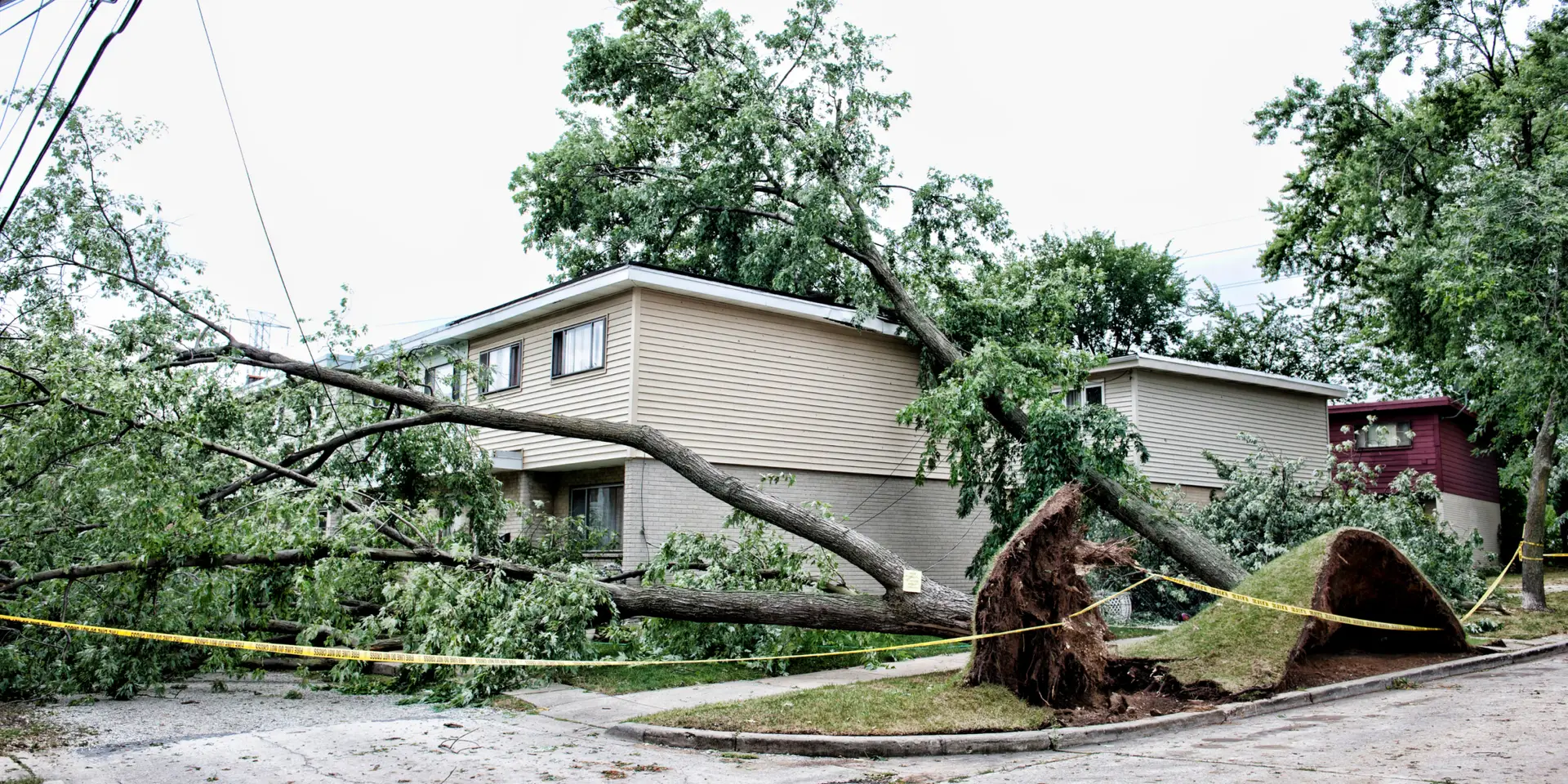
A tree that is already leaning toward your home, garage, fence, or neighbor’s property needs to be removed in a direction opposite to its lean. That requires back rigging, sometimes a crane, and experienced judgment about how the tree will respond to each cut. This is not a job for a come-along winch and a hope.
Storm-damaged trees
A storm-damaged tree is under tension and compression in ways that are not visible. A partially uprooted tree may spring back violently when cut. A split trunk may fall in two directions simultaneously. Our emergency storm damage team handles exactly these situations 24 hours a day across Central Indiana. Do not attempt to clean up a downed tree that is resting on a structure yourself.
DIY vs. Professional: Side by Side
| Situation | DIY Realistic? | Pro Required? |
| Small tree under 15 ft, open fall zone, no structures nearby | Often yes | Not always |
| Tree over 20 feet tall | No | Yes |
| Any tree near or touching power lines | No | Yes, plus utility company |
| Tree leaning toward a structure | No | Yes |
| Dead or heavily decayed tree | No | Yes |
| Storm-damaged or partially uprooted tree | No | Yes |
| Tree within fall distance of a roof, fence, or vehicle | No | Yes |
| Stump grinding for stumps under 10 inches | Sometimes | Often more efficient |
| Dead branch removal from the ground | Yes | Optional |
What Happens When DIY Goes Wrong
The consequences of a tree removal gone wrong fall into a few categories, and none of them are small.
Property damage
A tree that falls in the wrong direction can cause tens of thousands of dollars in roof, structural, or fence damage. If a homeowner caused the damage through negligent tree work, homeowners insurance may not cover it, or may cover it only partially. The cost of the removal you were trying to save money on suddenly looks very small next to the repair bill.
Injury
Chainsaw injuries are among the most severe of any tool-related injury category. They require immediate emergency care and often result in permanent damage. Falls from ladders during tree work are a leading cause of homeowner fatality in outdoor projects. These are not theoretical risks.
Neighbor and liability issues
If a tree you were removing falls on a neighbor’s property, vehicle, or fence, you are liable for the damage. If you were operating without the skill or equipment to do the job safely, that liability is harder to defend. A professional crew carries general liability insurance that covers exactly this scenario. When you do the work yourself, you are carrying that risk personally.
Hidden problems that become bigger problems
Homeowners who attempt partial tree removal, cutting the top off a tree or removing major limbs without understanding load and weight distribution, often create more hazardous trees than they started with. A tree with poorly made cuts or an unbalanced canopy is more likely to fail in a storm than the original tree was.
Ready to let a professional handle it? Request your free estimate at profinishoutdoor.com/contact or call (317) 910-9563. We serve all of Central Indiana.
What Professional Tree Removal Actually Costs vs. What DIY Damage Costs
The reason most homeowners consider DIY tree removal is cost. That is a legitimate consideration. Professional tree removal in the Indianapolis area typically runs from $150 for a small ornamental tree to $1,500 or more for a large hardwood in a difficult location.
Compare that to:
- Roof repair from a fallen tree: $5,000 to $25,000 or more depending on the damage
- Emergency room visit for a chainsaw injury: several thousand dollars minimum, before any follow-up care
- Neighbor’s fence or vehicle damage: $2,000 to $10,000 depending on what was hit
- Homeowners insurance deductible if a claim is even accepted: typically $1,000 to $2,500
Professional tree removal is not cheap. But it is nearly always less expensive than the realistic alternative when a DIY job goes sideways. And for the jobs that genuinely are manageable for a homeowner, a professional estimate gives you a number to compare against before you decide.
Why Central Indiana Homeowners Choose Pro Finish Tree Care
Pro Finish Tree Care is a veteran-owned, family-operated business that has served Indianapolis, Fishers, Carmel, Noblesville, Westfield, Greenwood, and surrounding communities since 2019.
Owner Jesse Dickson is a United States Army veteran who is present on every job. We carry full general liability and workers’ compensation insurance. We provide written estimates before any work begins and do not start until you understand exactly what we are doing and why.
You can read more about us on the About Us page or see completed jobs in the Past Projects gallery.
Free estimate, no obligation. Contact us at profinishoutdoor.com/contact or call (317) 910-9563. We will tell you honestly whether your job needs a pro or not.
Frequently Asked Questions: DIY Tree Removal
Can I legally remove a tree on my own property?
In most cases, yes. Indiana does not have a statewide law prohibiting homeowners from removing trees on their own property. Some municipalities have local ordinances governing certain trees, particularly those in public right-of-way areas or designated historic zones. HOA covenants may also restrict what you can remove without approval. Check local rules before starting work.
Do I need a permit to remove a tree myself in Indianapolis?
For most standard residential removals of trees on private property, a permit is not required in Indianapolis or Hamilton County. Exceptions include trees in public easements, historic district properties, and certain development-related removals. We advise on permit requirements during every free assessment.
What is the safest way to remove a small tree yourself?
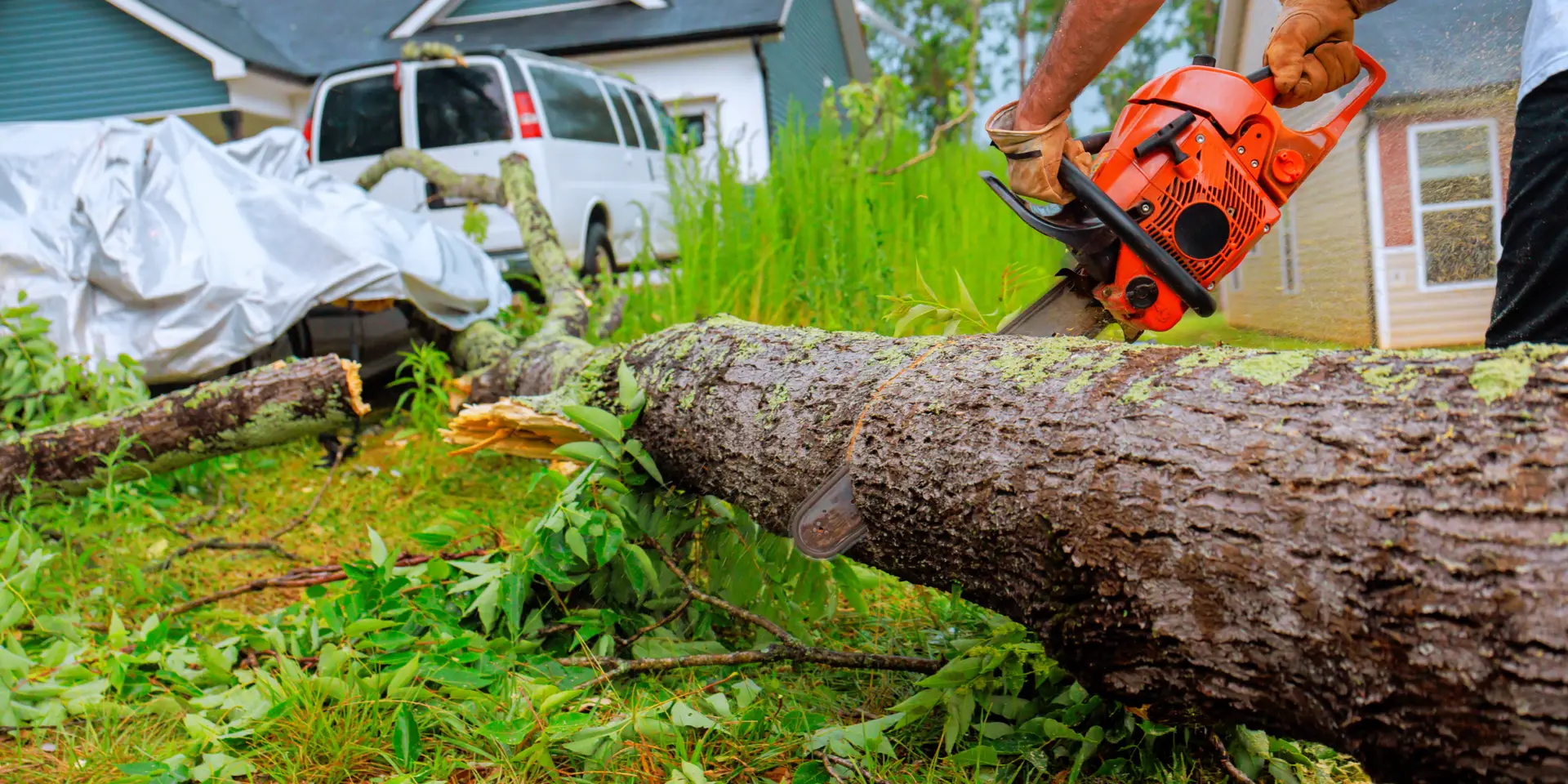
Assess the fall zone first and make sure it is completely clear of people, structures, vehicles, and utility lines in every direction. Use a sharp chainsaw with proper protective gear including chaps, helmet, face shield, and gloves. Plan your escape path before you make the first cut, and never stand directly behind the tree as it falls. If you have any doubt about the fall direction, stop and call a professional.
What should I do with the stump after I remove a tree myself?
You have a few options: rent a stump grinder for smaller stumps, use a chemical stump remover which takes months, dig it out manually for very small stumps, or call us for professional stump grinding. For most residential stumps, professional grinding is the fastest and most cost-effective option even if you removed the tree yourself.
I cut down a tree and it fell on my fence. What do I do now?
Document the damage with photos immediately. Contact your homeowners insurance company to understand your coverage. For removal of the tree from the fence and any remaining stump work, call us at (317) 910-9563 or visit profinishoutdoor.com/contact. We handle cleanup and removal for exactly these situations across Central Indiana.