Westfield is one of the fastest-growing cities in Indiana. New subdivisions are going up across the northern edge of Hamilton County, and tens of thousands of people have moved here in the past decade alone. That growth means a large number of homeowners are dealing with something they may not have planned for: trees they did not plant, do not know the history of, and are not sure how to manage.
Whether you bought a new build on land that was recently cleared, purchased an existing home with a mature yard, or moved into a subdivision where the developer planted the trees, this guide covers what to do in the first year of homeownership to get your trees in order.
Why Westfield’s Growth Creates Specific Tree Challenges
Most of northern Hamilton County was agricultural land until relatively recently. When developers clear land for a new subdivision, they typically remove most of the trees, grade the land, build the homes, and then plant new trees around the finished lots. Those planted trees are usually young, often fast-growing species chosen for aesthetics, and placed without much regard for long-term growth patterns.
At the same time, some Westfield properties retain trees from before development: large field trees, fencerow trees, or woodlot edges that were left standing when the lots were platted. These trees often have compromised root systems from nearby grading, trunk damage from construction equipment, or structural issues that were not visible at the time of purchase.
Both situations, newly planted trees and inherited pre-development trees, create real management questions for new homeowners.
Step 1: Get a Professional Tree Assessment in the First Year
The single most useful thing a new Westfield homeowner can do is have a professional walk the property and give you an honest read on every tree before any problems develop.
A good assessment covers:
- Structural integrity: any cracks, included bark, co-dominant stems, or lean that suggest a higher failure risk
- Root zone health: signs of construction damage, soil compaction, girdling roots, or root rot
- Disease and pest status: early signs of Emerald Ash Borer, oak wilt, or fungal infection that are easier to address before they advance
- Proximity hazards: trees that are too close to the house, growing into the roofline or gutters, or on a trajectory toward a structure
- Long-term outlook: an honest read on which trees are worth investing in and which are likely to become problems
Pro Finish Tree Care provides free on-site assessments across Westfield and all of Hamilton County. We will walk the property with you and give you a clear picture of what you have. Request your assessment here.
Common Tree Situations We See in Westfield New Builds
Builder-planted trees in poor locations
Developers often plant trees for curb appeal without much thought for the 20-year outcome. Common issues include trees planted too close to foundations, under utility lines, or in spots that will create root conflicts with driveways and sidewalks as the tree matures. Catching these early, before the tree reaches a size where removal becomes expensive, is valuable.
Retained field trees with construction damage
A large field tree that survived the construction process may look healthy on the surface but have significant root damage from grading, soil compaction from equipment staging, or trunk damage from construction vehicles. These trees can decline slowly over several years before the problem becomes obvious, and by that point the structural risk is significant.
If your property has any large trees that were standing during construction, they are worth a professional look regardless of how healthy they appear.
Fast-growing species with structural weaknesses
Silver maples, Bradford pears, and Leyland cypresses are common builder plantings because they establish quickly and look good fast. All three have well-documented structural weaknesses that create real problems at maturity. Silver maples are prone to branch failure in ice storms. Bradford pears split at the crotch as they age. Knowing what species you have and what their failure patterns are helps you plan ahead.
Ash trees with Emerald Ash Borer
Emerald Ash Borer has been active in Hamilton County for years, and untreated ash trees are almost universally infested at this point. If you have ash trees on your property that have not been treated, assume they are compromised. A professional assessment will confirm the extent of the infestation and advise on whether treatment is still viable or whether removal is the more practical option.
Unsure about the trees on your Westfield property? Schedule a free assessment at profinishoutdoor.com/contact and we will walk through every tree with you.
When New Westfield Homeowners Need Tree Removal
Not every tree problem requires removal, but some situations call for it. Our tree removal services page covers the full process, but here are the situations we most commonly encounter with new Westfield homeowners.
Trees too close to the structure
A tree planted 8 feet from the house may not be a problem at year one, but at year fifteen the root system will be lifting your foundation, the canopy will be over your roof, and removal will be significantly more expensive than it would have been earlier. If a tree is within 10 to 15 feet of your home’s foundation, it is worth getting an honest assessment of the long-term trajectory.
Dead or declining ash trees
An ash tree that is past the point of treatment needs to come down before it fails on its own. Dead ash trees deteriorate quickly and become structurally unpredictable within a year or two of death. The longer a dead ash stands, the harder and more expensive the removal becomes.
Trees leaning toward a structure after ground disturbance
New construction involves significant soil movement, grading, and compaction. Trees near construction zones sometimes develop a lean as disturbed soil settles unevenly. A tree that has shifted its lean since construction finished should be evaluated promptly.
Land clearing for additions or outdoor projects
Westfield’s growth has also brought a wave of homeowners expanding their properties: adding pools, decks, three-season rooms, and outbuildings. If your project requires clearing trees or stumps, we handle residential land clearing across the area.
Stump Grinding After Removal: Why It Matters for New Properties
If you are removing trees from a Westfield property, plan for stump grinding as part of the same job. New homeowners sometimes skip this step and regret it later. Visible stumps in a new yard are a tripping hazard, an obstacle for mowing, and in some HOA communities a compliance issue. Grinding the stump below grade lets you sod or seed over the area cleanly and move on.
If you have stumps left over from the original land clearing that the developer did not remove, we can handle those as a standalone job as well.
Storm Season and New Westfield Properties
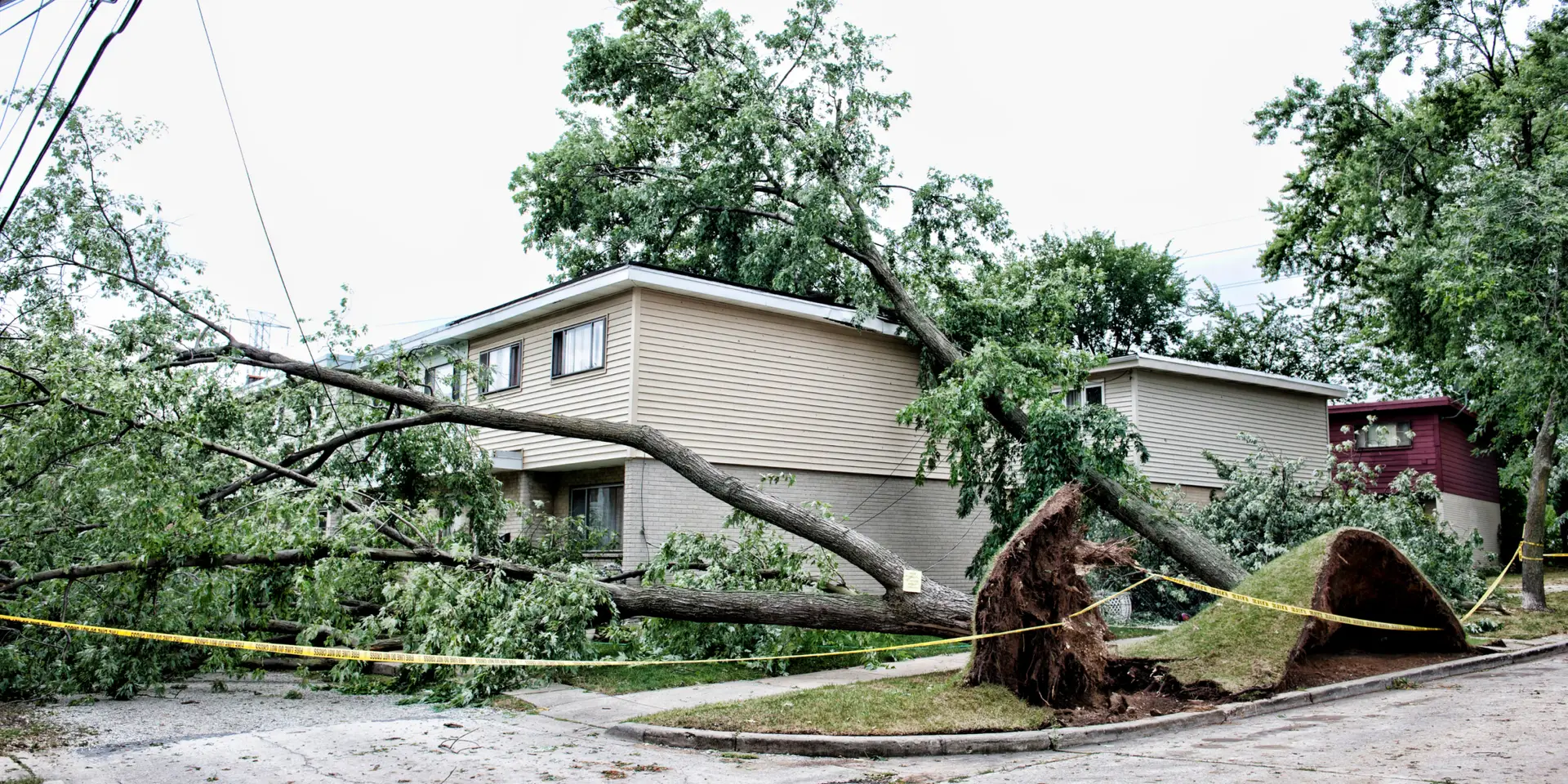
Indiana’s spring and summer storm seasons bring real wind and hail events to Hamilton County every year. New homeowners who have not yet had a storm assessment are often caught off guard when a tree fails.
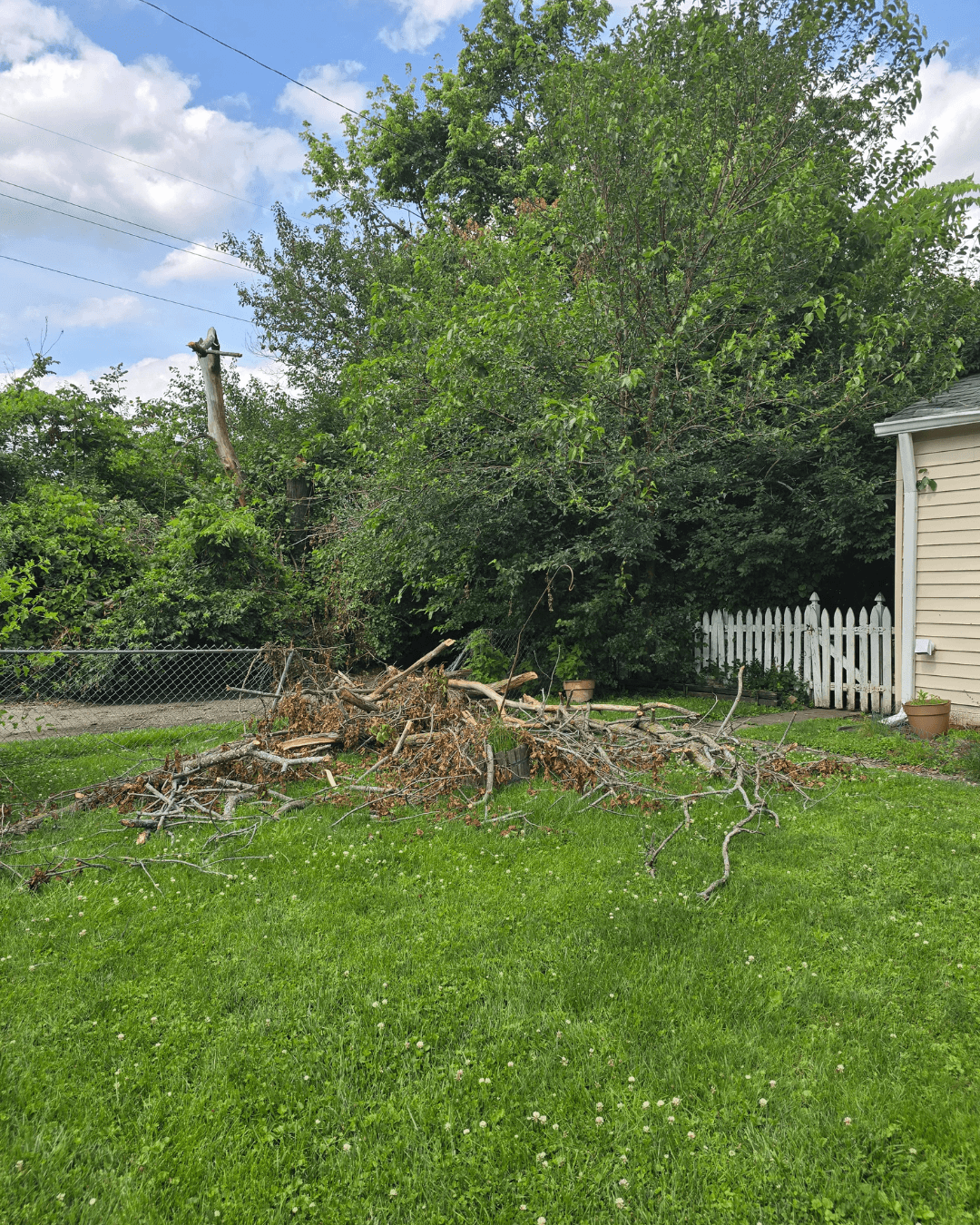
If a storm causes a tree to fall on your home, garage, fence, or vehicle, call us immediately. We provide 24/7 emergency storm damage response across Westfield and all of Central Indiana. We handle the removal, provide documentation for your insurance claim, and can install temporary tarping to protect your home while permanent repairs are arranged.
A Priority Framework for New Westfield Homeowners
If you are not sure where to start, here is a simple way to think about tree priorities on a new property.
| Priority | Tree Situation | Recommended Action |
| Immediate | Dead or heavily declining trees within fall distance of the home | Schedule removal as soon as possible |
| Immediate | Trees leaning toward the structure after ground disturbance | Professional assessment within 30 days |
| First year | Ash trees not previously treated for Emerald Ash Borer | Assessment to determine treatment vs. removal |
| First year | Builder-planted trees within 10 ft of foundation | Assessment for long-term trajectory |
| Ongoing | Fast-growing species like silver maple or Bradford pear | Monitor annually; prune for structure |
| Ongoing | All trees near the roofline or gutters | Trim back before storm season each year |
About Pro Finish Tree Care in Westfield
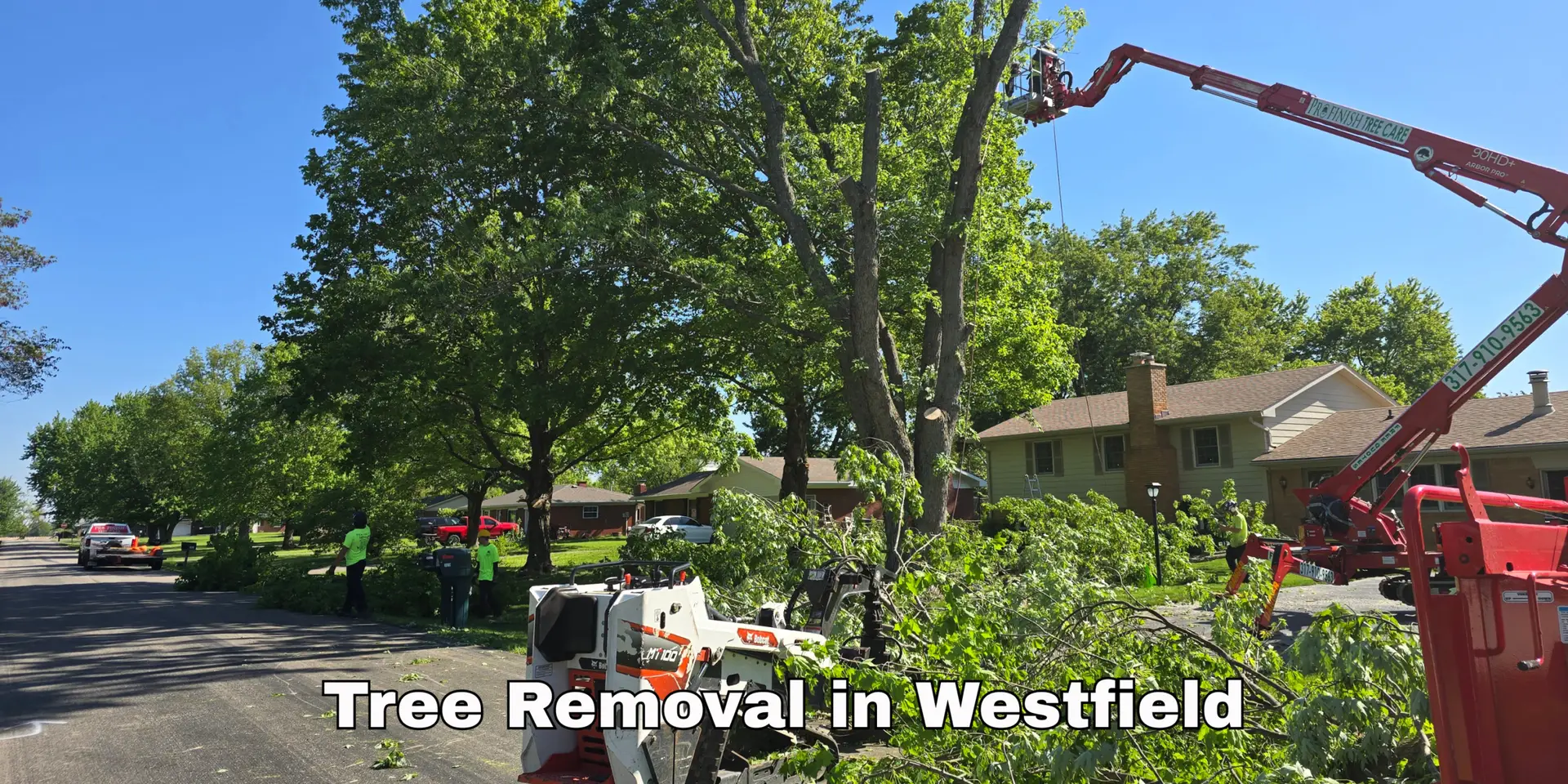
Pro Finish Tree Care provides tree removal, trimming, stump grinding, land clearing, and emergency storm response across Westfield and all of Hamilton County. We also serve Carmel, Fishers, Noblesville, Indianapolis, Greenwood, and surrounding communities.
We are a veteran-owned, family-operated business based in Fishers. Owner Jesse Dickson is a United States Army veteran who has served Central Indiana since 2019. You can read more on our About Us page or browse completed work in our Past Projects gallery.
New to Westfield and want a professional set of eyes on your trees? Get a free estimate at profinishoutdoor.com/contact or call (317) 910-9563.
Frequently Asked Questions: Tree Care for New Westfield Homeowners
How do I know if a tree on my new property is safe?
The most reliable way is a professional on-site assessment. Signs to watch for on your own include visible cracks in the trunk, significant lean especially if it has changed since you moved in, large dead branches in the canopy, fungal growth at the base of the trunk, and soil heaving or cracking around the roots. Any of these warrant a professional look before the next storm season.
The developer left several stumps on my property. Can you handle those?
Yes. Leftover stumps from land clearing are a common situation on newer Westfield properties. Our stump grinding service handles residential stump removal as a standalone job. We can grind multiple stumps in a single visit, which saves on mobilization costs.
Does Westfield require a permit to remove a tree?
For standard residential tree removal on private property, a city permit is not typically required in Westfield. Exceptions include trees in public right-of-way areas and projects that involve significant land disturbance or new construction. We will flag any permit considerations during your assessment.
My new subdivision has an HOA. Do I need approval before removing a tree?
Many Westfield subdivisions do have HOA covenants that govern landscaping and exterior modifications, including tree removal. Check your CC and Rs or contact your HOA management company before scheduling work. We can advise on what to expect once we know which community you are in.
Is it worth treating an ash tree or should I just remove it?
It depends on the tree’s condition and how much you value it. Treatment with an insecticide like emamectin benzoate can be effective if the tree is still relatively healthy, but it requires ongoing applications and is not a permanent fix. For a tree that is already heavily infested or in decline, removal is usually the more practical and cost-effective choice. We will give you an honest assessment of which way makes sense for your specific tree.
I am planning a pool or addition. How do you handle tree and stump removal for construction prep?
We handle residential land clearing for exactly this kind of project. The scope typically includes removing specified trees, grinding stumps, clearing brush, and hauling debris. We work around your construction timeline and can coordinate with your contractor. Contact us for a free walk-through and quote on any land clearing project.