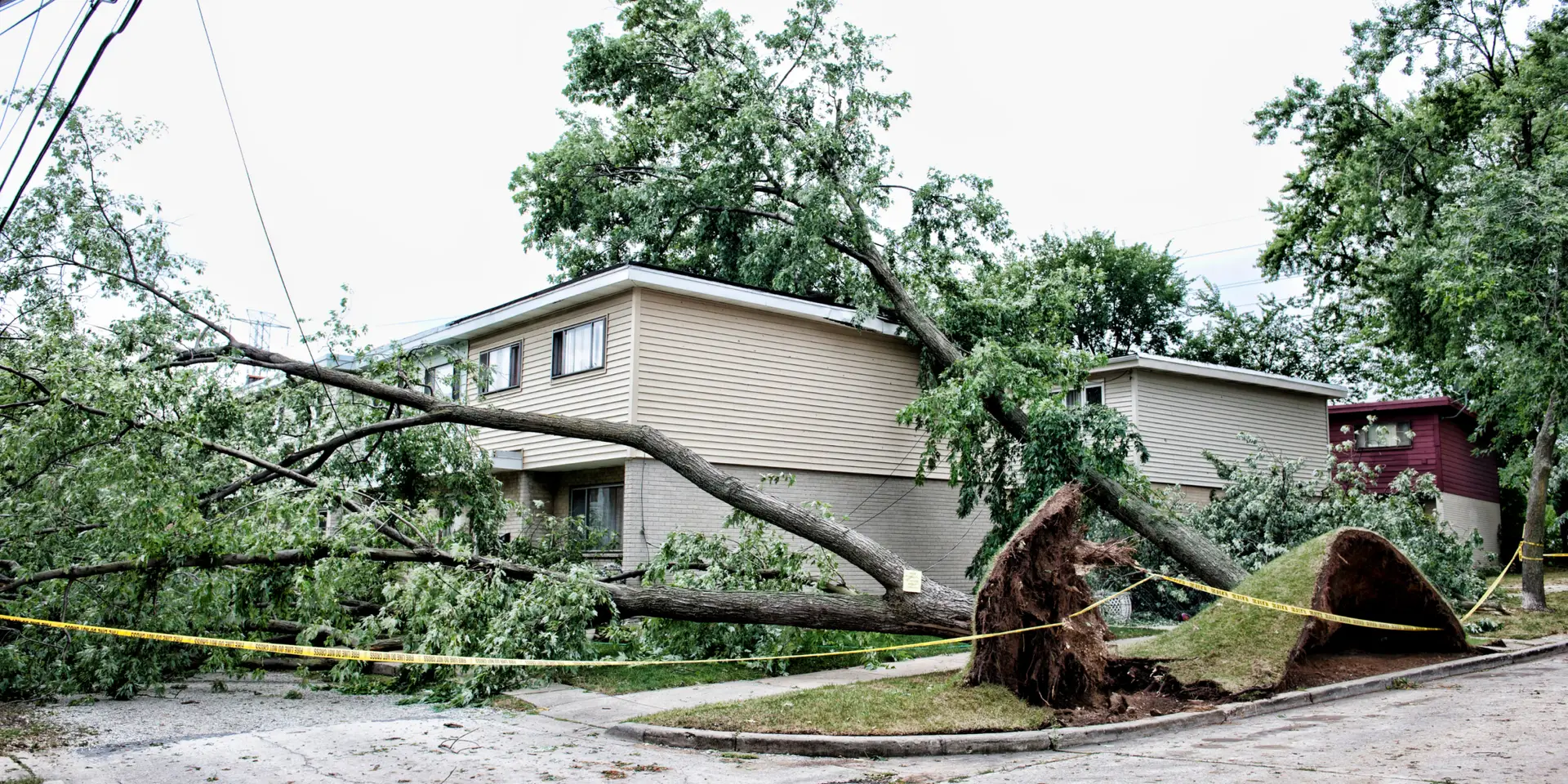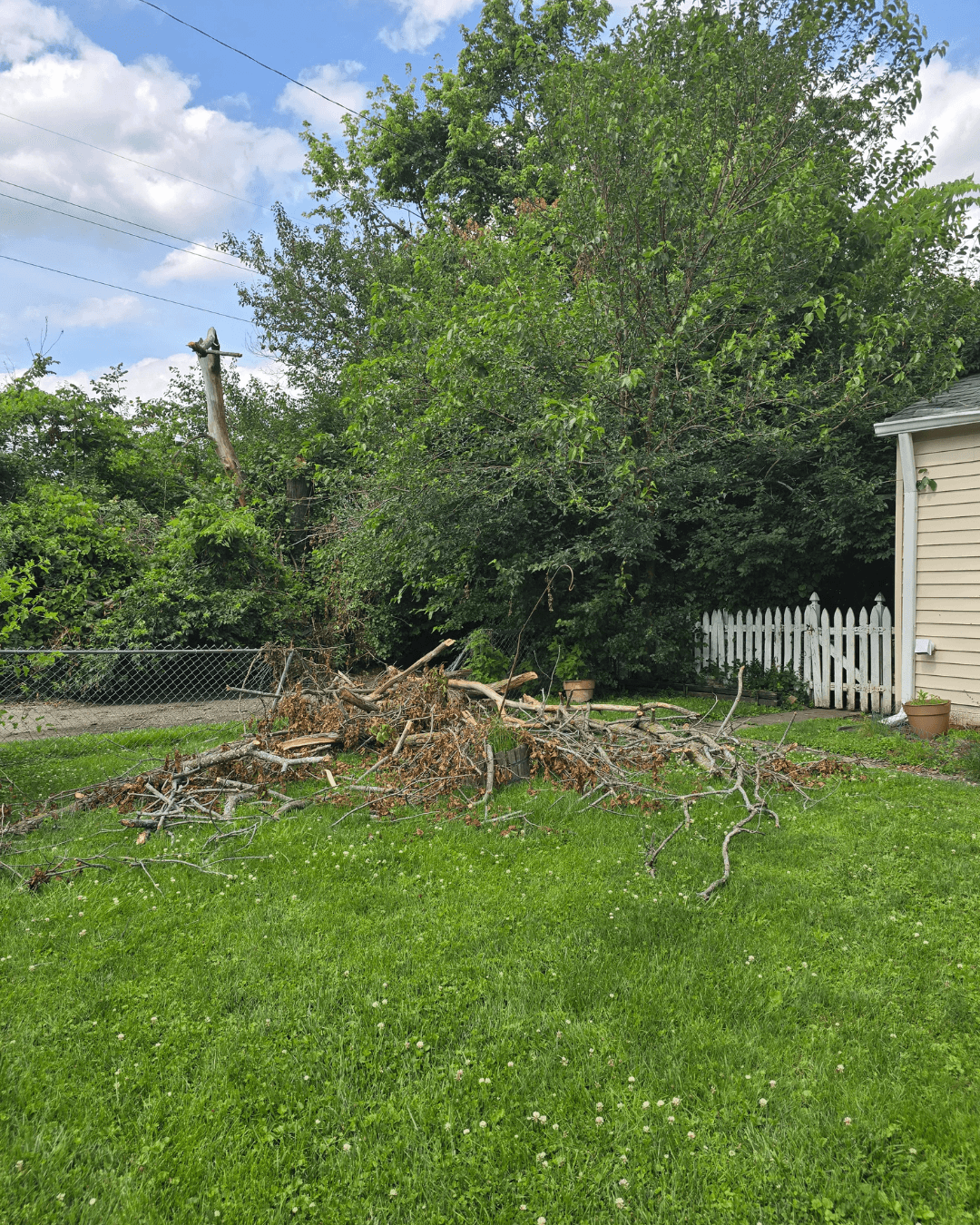
A tree does not have to fall on your house to turn your yard into a hazard zone. Split limbs, a leaning trunk, and scattered branches after a summer storm can block a driveway, threaten a fence line, or sit one gust away from causing real damage. Knowing what to do first, and when to call a professional, keeps everyone safe and keeps the cleanup from costing more than it should.
This guide walks through the exact steps Pro Finish Tree Care recommends to homeowners across Indianapolis, Fishers, Carmel, Noblesville, Westfield, and Greenwood when tree damage cleanup is on the to-do list, whether it is storm-related or the result of age, disease, or a long-overdue trim.
1. Check for Hazards Before You Touch Anything
Before any cleanup starts, walk the property from a distance and look for the following. If any of these apply, stay back and call a professional immediately rather than attempting cleanup yourself.
- Downed or sagging power lines anywhere near the tree or branches
- A tree or large limb leaning against another tree or structure under tension
- Cracked or split trunks that could shift or fall further
- Root systems that have partially lifted out of the ground
- Gas lines, meters, or utility boxes near the debris
If a tree is resting on power lines, treat the entire tree, the ground beneath it, and any metal fencing it touches as energized. Call your utility company and 911 first, then a tree service.
2. Document the Damage Before Cleanup Begins
If there is any chance you will file an insurance claim, this step matters more than people expect. Insurance adjusters work from photos and a clear description of when the damage happened.
- Take wide photos showing the tree in relation to your house, fence, or vehicle
- Take close-up photos of any structural damage, roof punctures, or siding damage
- Note the date and, if known, the storm or weather event that caused it
- Avoid moving debris that is touching a structure until your insurer has reviewed it, unless it is a safety hazard
A licensed tree company can typically start hazard mitigation the same day, even before your claim is fully processed, since most policies allow emergency measures to prevent further damage.
3. Understand What “Tree Damage Cleanup” Actually Includes
The term covers more than hauling away a fallen trunk. A complete tree damage cleanup job typically involves several distinct pieces of work, and it helps to know which ones you actually need before requesting a quote.
| Service | What it covers |
| Hazard removal | Cutting and removing any tree or limb that poses an immediate safety risk |
| Debris hauling | Loading and removing branches, brush, and wood from the property |
| Stump grinding | Grinding the remaining stump below grade so the area can be re-landscaped |
| Structural assessment | Evaluating remaining trees on the property for hidden storm stress or root damage |
| Lot and yard cleanup | Raking, blowing, and clearing smaller debris like leaves, twigs, and bark |
4. DIY Cleanup vs. Calling a Professional
Safe to handle yourself
- Small twigs, leaves, and light brush under about 2 inches in diameter
- Loose debris on open ground with no structural involvement
- Raking and bagging yard debris after a professional has cleared larger material
Call a licensed, insured tree service
- Anything requiring a chainsaw above shoulder height or off a ladder
- Trees or limbs resting under tension (they can snap back violently when cut)
- Any tree in contact with power lines
- Trunks over roughly 6 inches in diameter, or a full tree removal
- Stump grinding, which requires commercial equipment
Tree work is one of the more hazardous jobs a homeowner can attempt without training, largely because storm-damaged wood behaves unpredictably under stored tension. When in doubt, the cost of a professional crew is almost always lower than the cost of an ER visit or a second round of property damage.
5. What Tree Damage Cleanup Costs in Indianapolis
Pricing depends on tree size, how much of the tree came down, accessibility for equipment, and whether stump grinding or hauling is included. As a general range for the Indianapolis area:
- Single large limb or small tree: roughly $150-$600
- Medium tree, partial fall, no structural damage: roughly $600-$1,500
- Large tree down, extensive debris field, or tree on a structure: roughly $1,500-$3,500+
- Stump grinding, priced separately: typically $150-$500 per stump depending on diameter
These are general ranges, not a quote. Every property is different, and the fastest way to get an accurate number is a free on-site estimate.
6. Why Homeowners Choose Pro Finish Tree Care
Pro Finish Tree Care is a family-owned, veteran-owned tree service serving Indianapolis, Fishers, Carmel, Noblesville, Westfield, and Greenwood. The crew handles hazard removal, storm damage cleanup, stump grinding, and full debris hauling, with 24/7 emergency response when a tree comes down without warning.
- Free, no-obligation quotes
- Fully insured crews
- 24/7 emergency storm response
- Locally owned, serving Central Indiana since 2019
How much does tree damage cleanup cost in Indianapolis?
Most residential tree damage cleanup jobs in the Indianapolis area run from around $400 for a single fallen limb or small tree to $2,500+ for a large downed tree with a wide debris field. Final cost depends on tree size, whether the tree fell on a structure, accessibility, and how much hauling and stump work is included. Pro Finish Tree Care provides free, no-obligation quotes before any work begins.
Will homeowners insurance cover tree damage cleanup?
Usually, yes, if the tree fell due to a covered peril like wind, storm, or lightning and it damaged a structure, fence, or vehicle. Most policies include a cleanup allowance, often $500-$1,000, even if the tree missed your house but blocked a driveway or damaged a fence. A tree that fell from natural causes with no property damage is sometimes excluded, so it is worth a quick call to your agent before assuming either way.
How soon should storm-damaged trees be cleaned up?
Immediately if the tree is on a structure, blocking an exit, leaning on power lines, or resting against another tree under tension. Those situations are genuine emergencies. For debris that is simply down in the yard with no ongoing hazard, cleanup within 24-48 hours is fine and gives you time to document damage for insurance and get a proper quote instead of paying storm-chaser prices.
Can I clean up tree damage myself?
Small branches and light brush are generally safe for a homeowner with the right gear. Anything involving a chainsaw at height, a tree resting under tension (a “spring pole”), a tree touching a power line, or a trunk over about 6 inches in diameter is a job for licensed, insured professionals. Tree work is consistently ranked among the more hazardous trades, and most residential accidents happen on jobs people assumed were simple.
Does Pro Finish Tree Care offer emergency tree damage cleanup?
Yes. Pro Finish Tree Care provides 24/7 emergency response for storm-damaged and fallen trees throughout Indianapolis, Fishers, Carmel, Noblesville, Westfield, and Greenwood, including hazard removal, debris hauling, and stump grinding.
Get a Free Tree Damage Cleanup Quote
If a storm, disease, or age has left your property with fallen limbs, a leaning tree, or a stump that needs to go, Pro Finish Tree Care is available now for a free, no-obligation quote and 24/7 emergency response.
Call (317) 910-9563 or request a quote at profinishoutdoor.com/contact