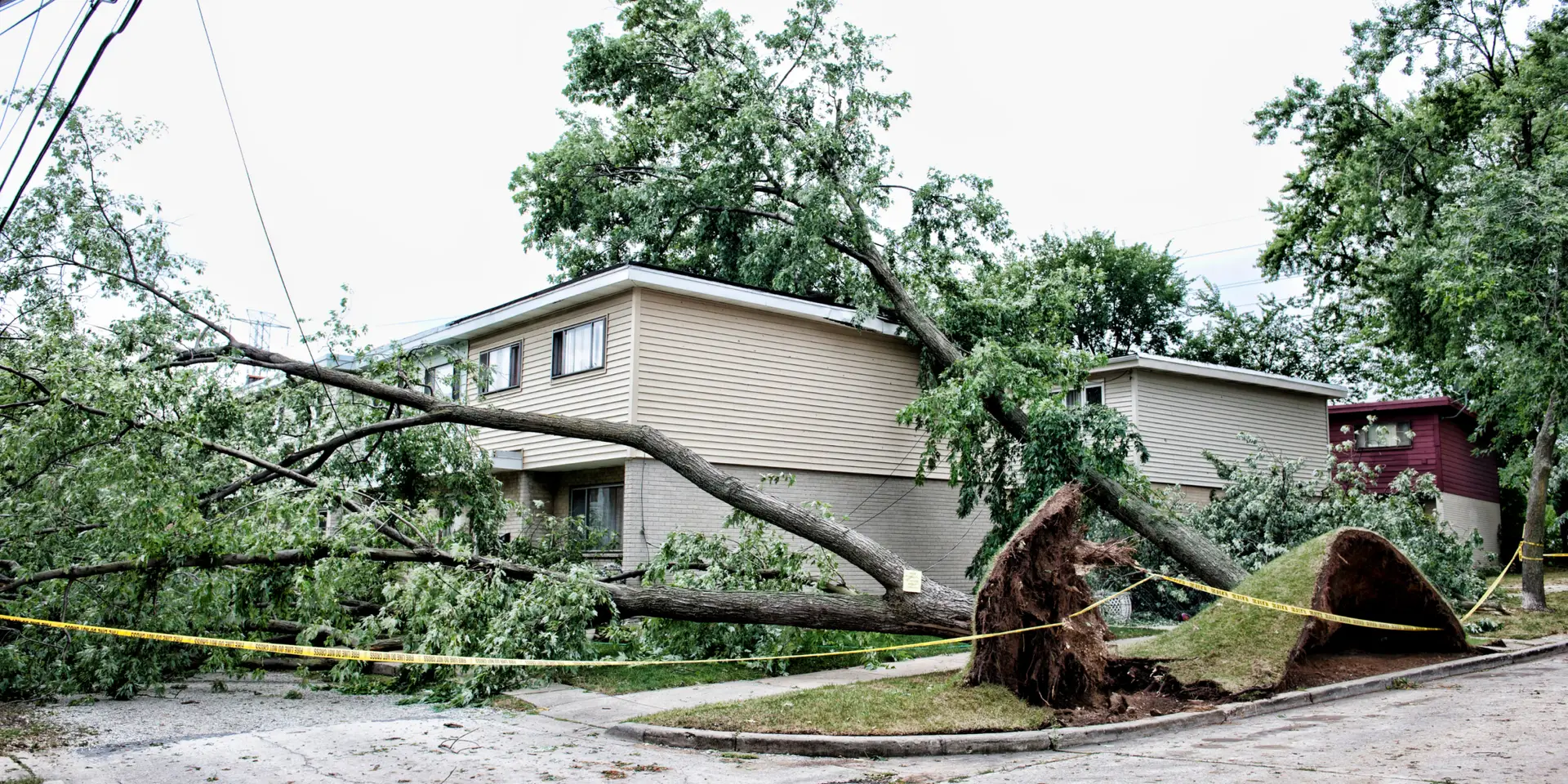
A leaning tree after a storm can be unsettling, especially when it is near your home, garage, driveway, fence, or power lines. While some trees naturally grow at an angle, a new lean after heavy wind, rain, snow, or ice can indicate that the tree has suffered root or structural damage.
If a tree is leaning toward a structure or appears unstable, keep a safe distance and contact Pro Finish Tree Care for emergency tree services in Indianapolis, Fishers, and Central Indiana.
Why Does a Tree Lean After a Storm?
Storms can create a combination of wind pressure, saturated soil, broken branches, and shifting root systems. Even a tree that looked healthy before the storm may become unstable when its root plate loosens or one side of the canopy loses significant weight.
Common causes of a new lean include:
- Strong straight-line winds or gusts
- Saturated soil after prolonged rain
- Root damage or root decay
- Broken or missing major limbs
- Ice and snow loading on branches
- Lightning damage or trunk splitting
Signs the Lean May Be Dangerous
Do not assume a tree will settle back into place on its own. A new lean should be evaluated quickly, especially if you notice any of the following:
- Cracked or raised soil around the base of the tree
- Roots lifting from the ground
- Exposed roots on one side of the trunk
- A trunk crack, split, or fresh wound
- Large broken limbs hanging in the canopy
- A tree leaning toward a home, road, driveway, or neighboring property
- Branches touching or near utility lines
If there are power lines involved, assume they may be energized. Stay away from the tree and contact the utility company or emergency services as appropriate.
What To Do Right Away
When you notice a leaning tree, taking the right steps can protect your family and property.
- Keep people, pets, and vehicles away from the tree.
- Do not climb the tree or attempt to cut branches yourself.
- Do not pull on limbs, ropes, or the trunk.
- Take photos from a safe distance for insurance documentation if needed.
- Call a professional for an assessment and safe removal plan.
For immediate help after wind, ice, or severe weather, explore our storm damage cleanup services.
Can a Leaning Tree Be Saved?
Not every leaning tree requires removal. The decision depends on the tree’s size, species, age, root condition, direction of lean, nearby targets, trunk condition, and whether the lean is new or longstanding.
Young trees with minor leaning may sometimes be corrected with appropriate support. Mature trees that have shifted after a storm, especially those with root lifting or trunk damage, are more likely to require professional removal.
Pro Finish Tree Care can help determine whether pruning, monitoring, or tree removal is the safest option.
Why You Should Not Handle It Yourself
Leaning trees can fail without warning. Cutting branches may change the tree’s weight distribution and cause it to shift suddenly. The risk increases when trees are damaged, wet, partially uprooted, or positioned near structures.
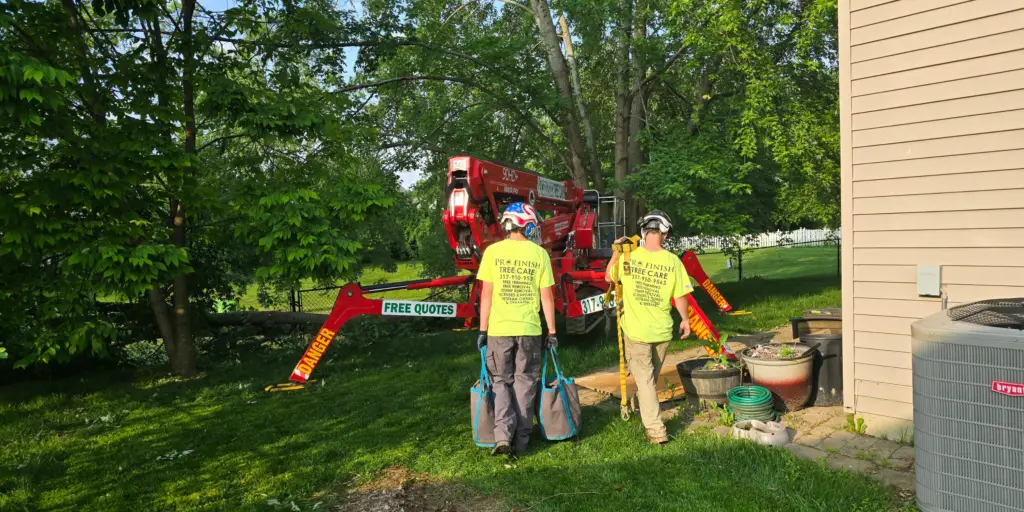
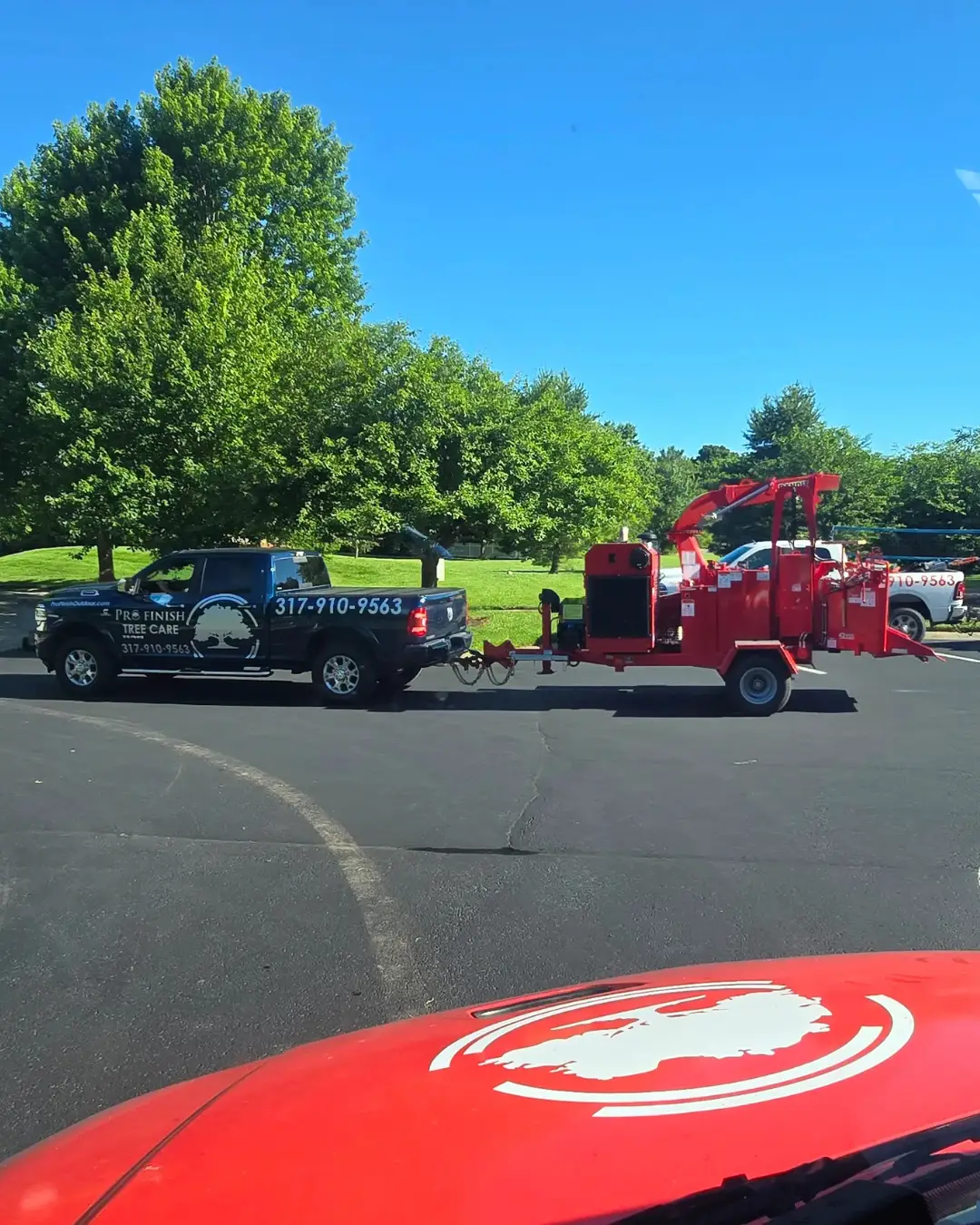
Our experienced crew has the equipment and knowledge needed to remove hazardous trees safely while protecting the surrounding property.
Need Emergency Tree Help in Indianapolis?
Pro Finish Tree Care provides fast, reliable tree removal and storm cleanup for homeowners and businesses across Indianapolis, Fishers, and surrounding Central Indiana communities. If a tree is leaning after a storm, do not wait for it to fall.