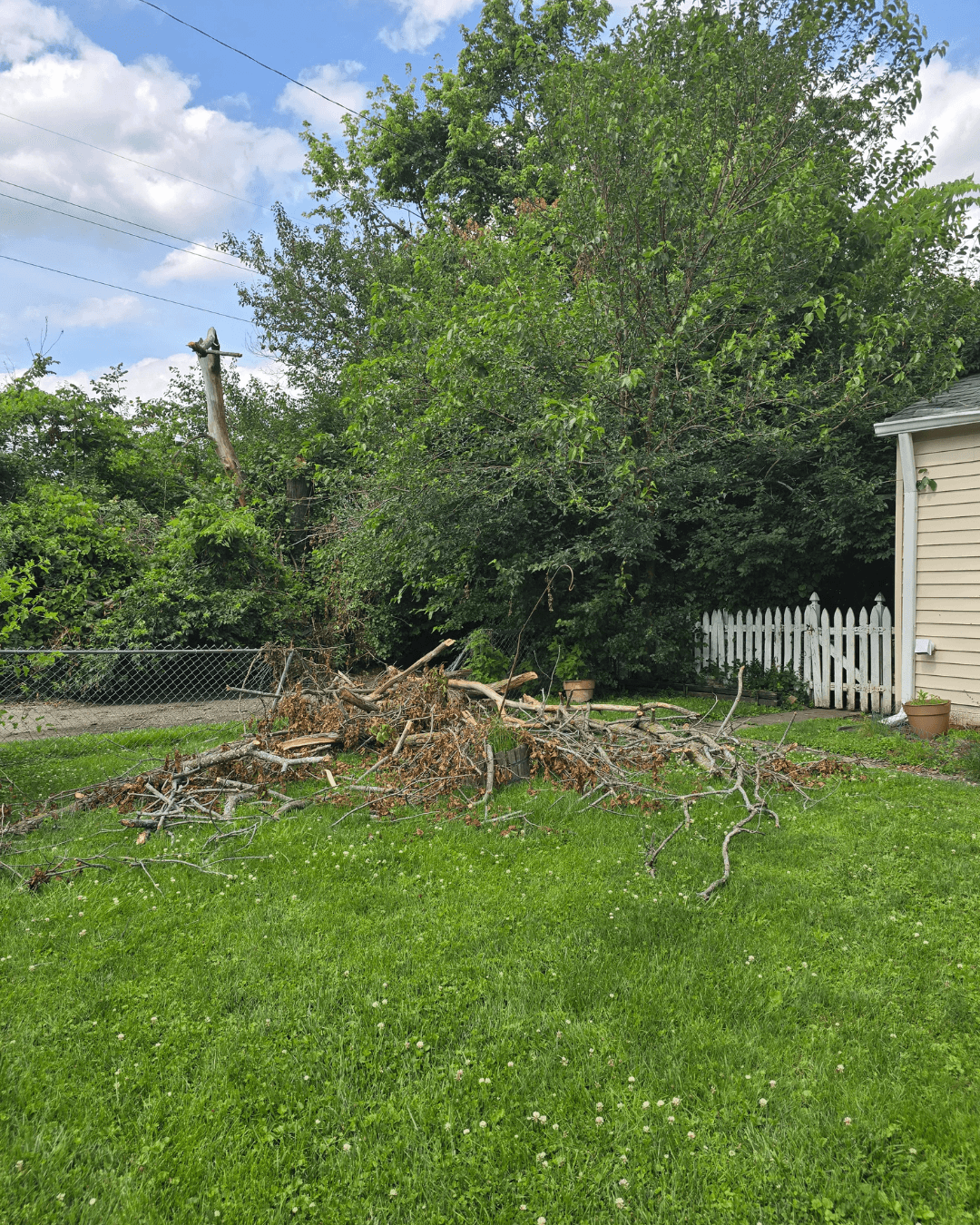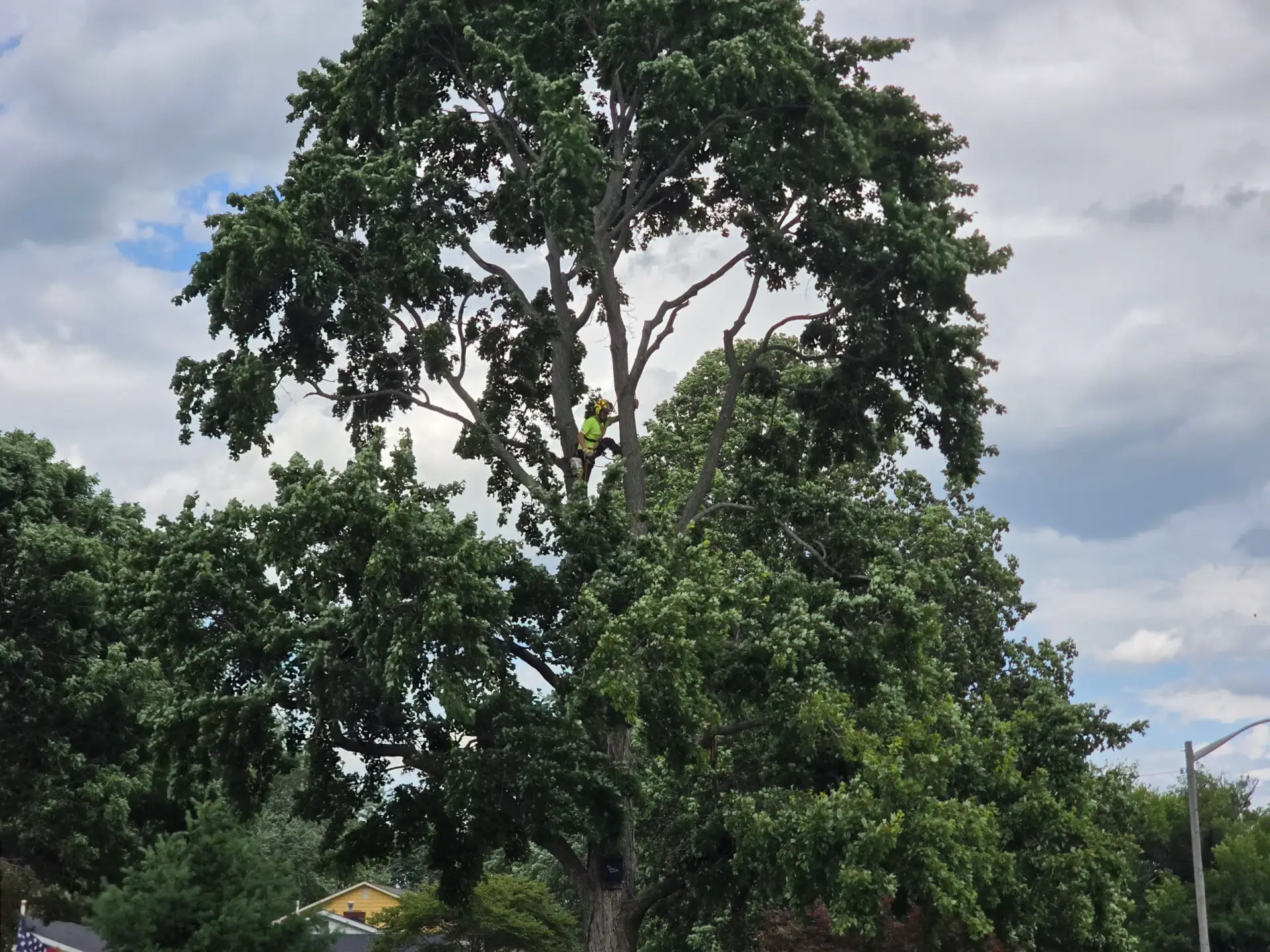
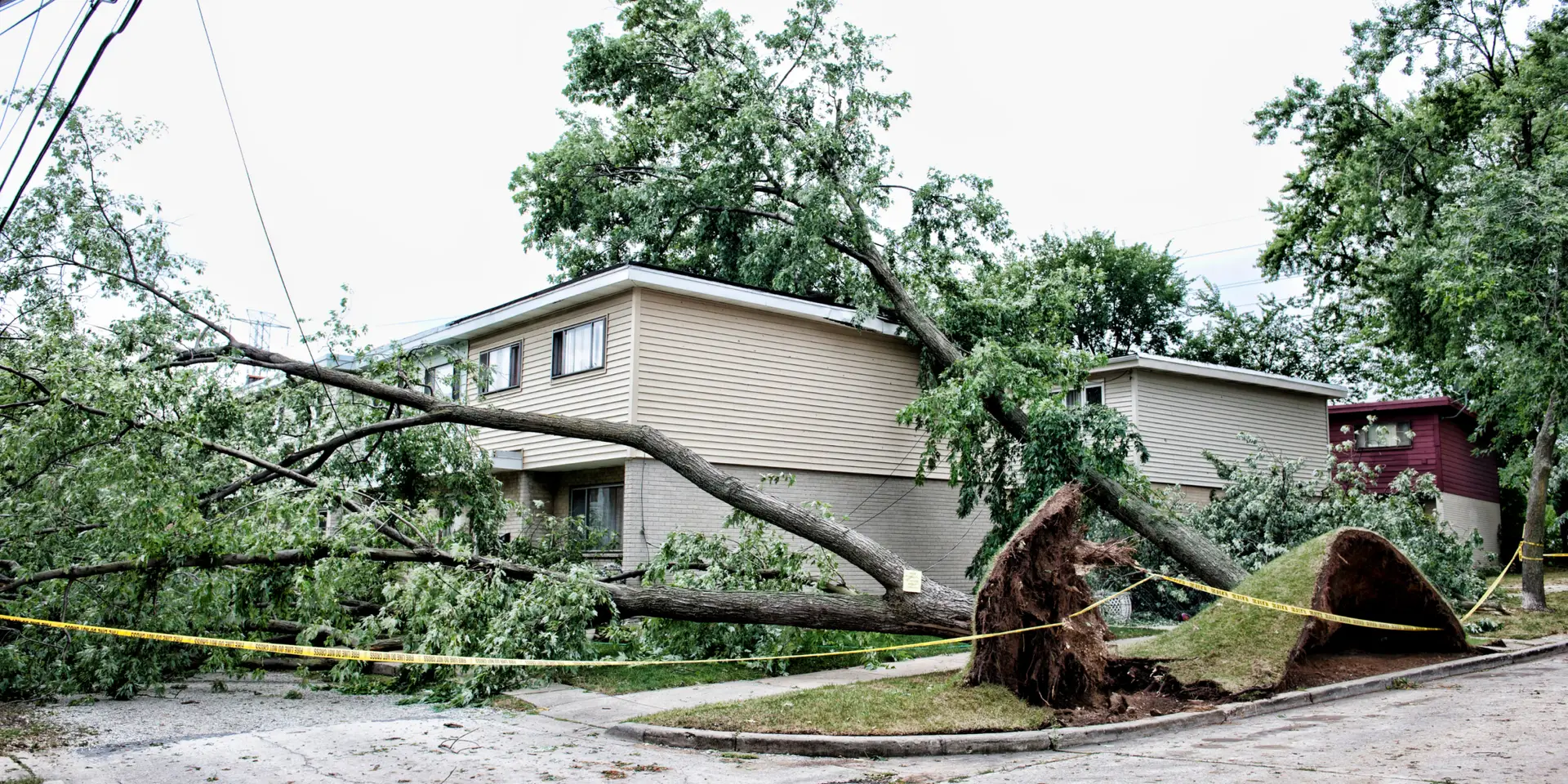
Not all storm damage happens the same way. A summer thunderstorm with straight-line winds breaks trees through sudden, violent force. A winter ice storm does the opposite: slow, steady weight that builds for hours before anything gives way. Central Indiana sees both, often in the same year, and knowing which type of damage you are looking at changes what to check for and how urgent the response needs to be.
How Wind Damages Trees
Wind attacks a tree through sudden force applied to the whole canopy at once. The tree acts like a sail, and the trunk and roots absorb the load.
- Blow-over: High winds combined with saturated soil, common after heavy rain, can uproot an entire tree, even a healthy one, because the ground itself loses its holding strength.
- Stem and branch failure: Sudden gusts snap branches or trunks quickly, often at existing weak points like old wounds, decay, or narrow branch unions.
- Directional damage: Trees develop strength against their prevailing wind direction over years. A strong gust from an unusual direction can catch a tree off guard structurally, even if it has weathered storms before.
Wind damage tends to be immediate and obvious. If a tree is going to fail from wind, it usually happens during the storm itself, not hours or days later.
How Ice Damages Trees
Ice works on a completely different timeline. A layer of ice can add hundreds of pounds of static weight to a tree’s branches, and that load builds gradually rather than hitting all at once.
- Bending before breaking: Branches bow under the accumulating weight, sometimes for hours, before reaching a breaking point.
- Weak union splitting: Trees with narrow, V-shaped branch angles are especially vulnerable, since ice weight puts direct stress on the weakest structural point in the tree.
- Delayed failure: Ice-damaged branches sometimes do not fail until the ice starts melting and shifting, or until wind is added on top of the existing ice load. Damage can continue to appear for a day or more after the ice event itself has passed.
This is why ice storm damage often requires more patience when assessing a property. A tree that looks stable right after the ice stops falling can still fail hours later as conditions change.
Which Indiana Trees Are Most at Risk
Certain species common in Central Indiana yards are more prone to failure under one type of load or the other:
- Bradford pear: Extremely vulnerable to both wind and ice due to weak, tightly-angled branch structure. These trees are known for splitting apart rather than losing individual limbs.
- Silver maple: Brittle wood makes it prone to sudden branch snapping under both wind gusts and ice weight.
- Boxelder: Similarly weak-wooded and prone to storm failure of either type.
- Mature oaks and other hardwoods: Generally more storm-resistant when healthy, though old wounds, decay, or lopsided canopies from past damage can still create failure points under either type of load.
What to Do After Each Type of Storm
After Wind Damage
Check for immediate hazards first: hanging limbs, leaning trees, and anything resting on power lines or structures. Because wind failure happens quickly and is usually visible right away, a walk-through the same day the storm passes is generally sufficient to identify what needs attention.
After an Ice Storm
Wait until it is safe to be outside, since ice underfoot and falling debris both remain hazards while conditions are still icy. Once you can safely assess the property, look not just for obvious breaks but for branches that are cracked and still hanging, sometimes called widow-makers, and trees with a lean that developed during the event. Because ice damage can continue to appear as conditions change, plan to check the property again over the following day or two, not just immediately after the ice stops.
In both cases, avoid working near downed limbs or leaning trees yourself, especially anything near power lines or under continued tension. Our storm damage cleanup guide covers the full safety and documentation process once you have identified what needs attention.
Reducing Risk Before the Next Storm
Regular pruning that removes weak branch unions, dead wood, and lopsided growth reduces vulnerability to both wind and ice damage. This matters most for the species listed above, but any mature tree benefits from periodic structural assessment, especially if it has old damage that never fully healed. See our arborist services guide for what a professional evaluation covers.
Storm Damage on Your Property Right Now?
Whether it’s wind or ice, our crew can assess the damage and respond safely, day or night.
Call (317) 910-9563 or request a free quote online
Frequently Asked Questions
Is ice storm damage or wind storm damage worse for trees?
Neither is universally worse. It depends on the tree species, existing structural weaknesses, and soil conditions. Wind is more likely to uproot a tree outright, while ice is more likely to cause branch and trunk splitting at weak unions.
Why did my tree fail hours after an ice storm ended?
Ice-related failure can be delayed as accumulated weight continues to stress weak points, or as melting ice shifts on branches. It is common for damage to appear well after the ice itself has stopped falling.
How soon should I check my trees after a storm?
After wind, a same-day walk-through is generally enough since damage is usually immediate and visible. After ice, check again over the following day or two, since additional failures can occur as conditions change.
Can pruning prevent ice and wind damage?
Regular pruning reduces risk significantly by removing weak branch unions and dead wood before a storm tests them, though it cannot eliminate risk entirely for naturally weak-wooded species.
Trust the Pros With Storm-Damaged Trees
Pro Finish Tree Care is veteran-owned, BBB-accredited, and serving Fishers, Carmel, Noblesville, Westfield, Greenwood, and Greater Indianapolis since 2019.