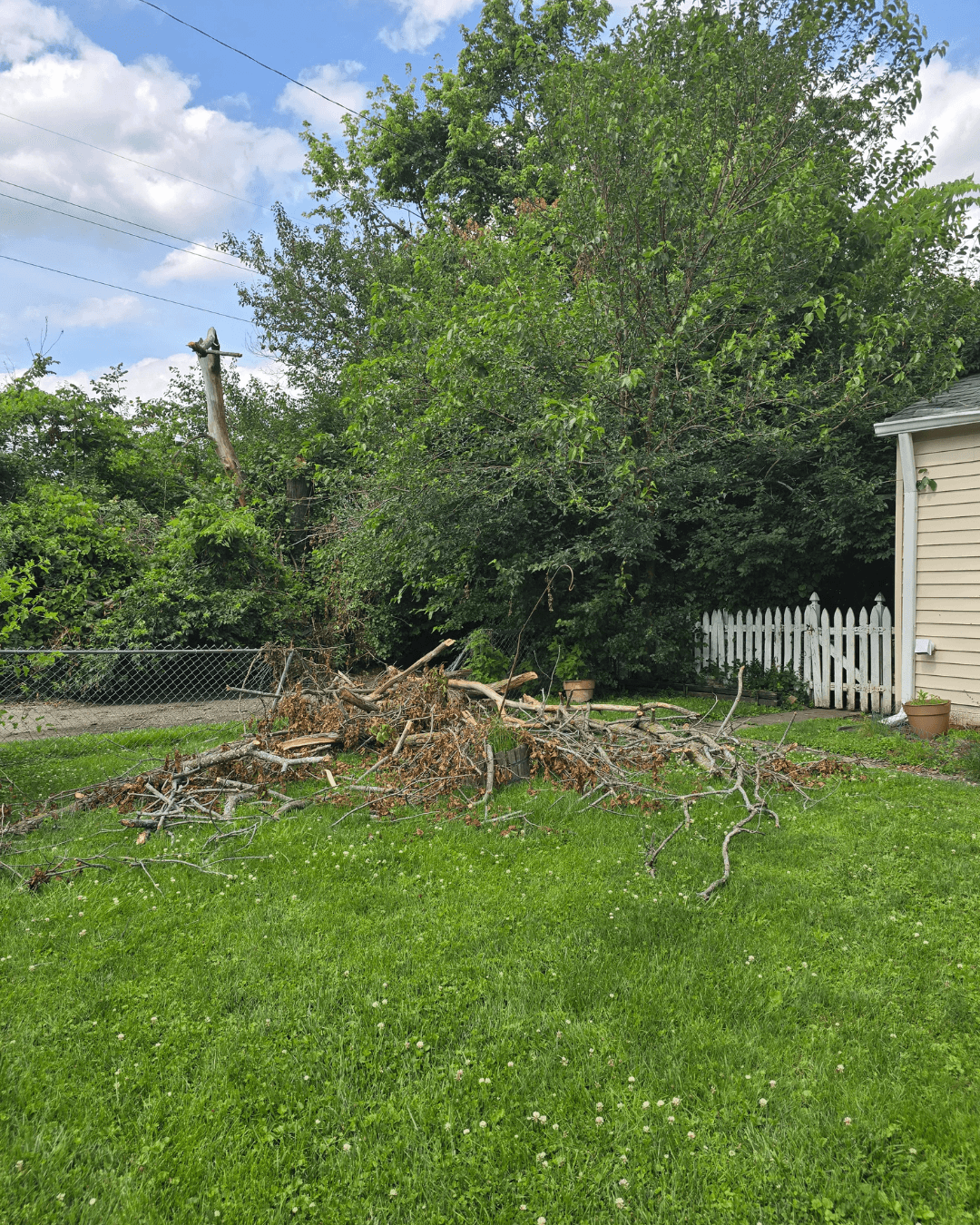
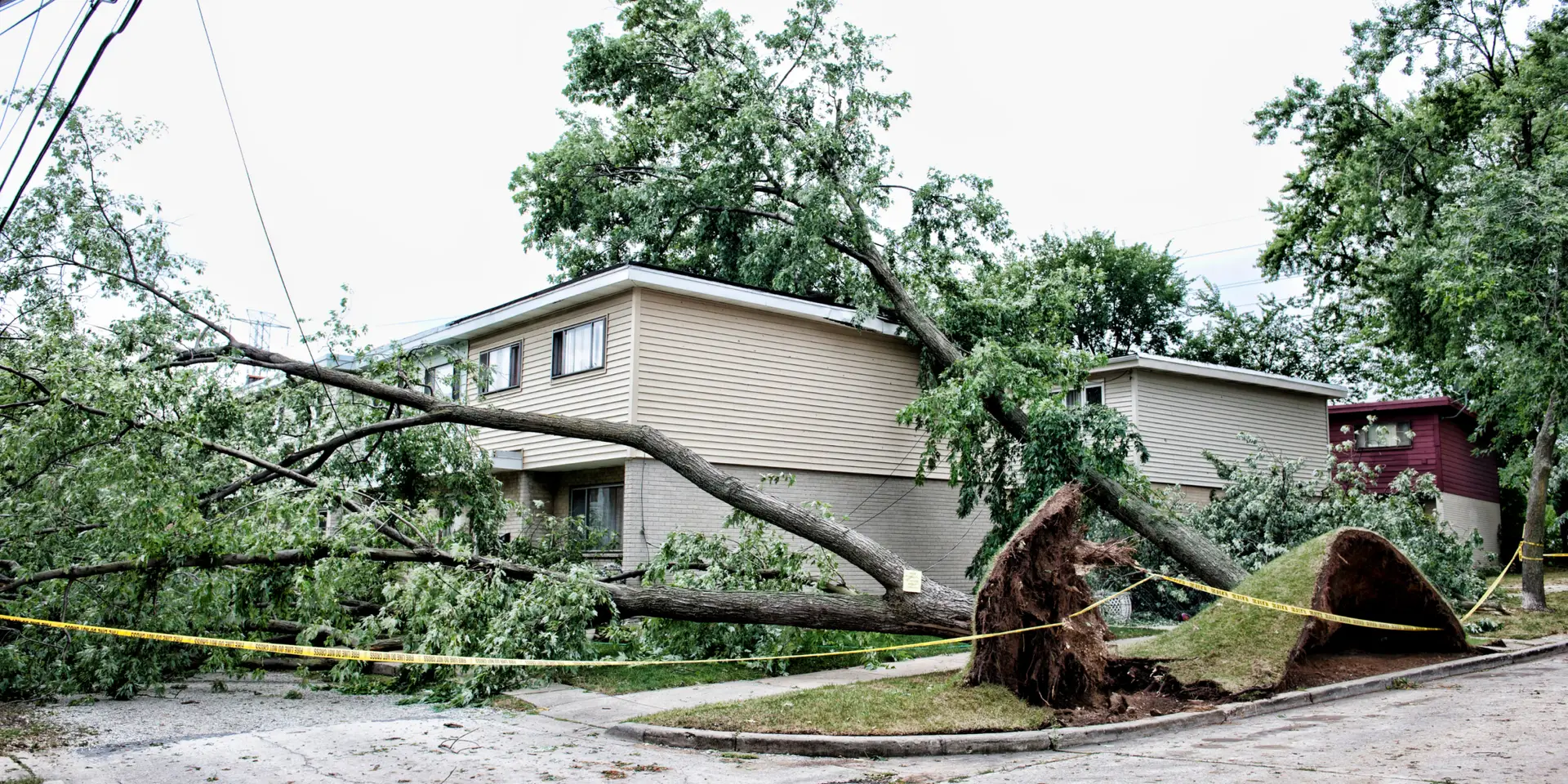
Johnson County gets hit hard by storms. Spring and early summer bring severe thunderstorms, straight-line winds, and occasional tornadoes that test every tree on your property. Greenwood homeowners who take an hour or two to assess their trees before storm season are the ones who avoid the emergency phone calls, the insurance claims, and the expensive post-storm removals.
This guide walks through exactly what to do before storm season arrives: how to identify trees that are likely to fail, what maintenance actually reduces risk, and when a tree needs to come down before the storms do it for you.
Step 1: Walk Your Property and Look for These Warning Signs
You do not need to be a certified arborist to spot most of the signs that a tree is at elevated risk of storm failure. Start by walking your property on a dry day and looking for the following.
Structural red flags in the trunk
- Large vertical cracks running up the trunk
- Cavities or hollow sections, especially near the base or major crotches
- Fungal growth (mushrooms or conks) at the base or on the roots
- Bark that is peeling or falling off in large sections on an otherwise living tree
- A visible lean that appears to have changed or worsened
Canopy warning signs
- Large dead branches, especially those over the roofline, driveway, or fence
- Branches that cross and rub against each other, creating wound points
- A lopsided canopy that puts uneven weight and wind load on one side of the tree
- Last year’s leaves still clinging to branches on an otherwise leafed-out tree, a sign of dieback
Root zone concerns
- Soil heaving or cracking in a circle around the base of the tree
- Exposed surface roots that look dark, soft, or show signs of decay
- Nearby construction, excavation, or paving that has changed soil levels or cut through roots
Any tree showing multiple signs from these lists should be assessed by a professional before the next major storm. One or two isolated signs may not be urgent, but a pattern of issues in the same tree is a real warning.
Not sure what you are looking at? Request a free on-site assessment at profinishoutdoor.com/contact and we will walk the property with you.
Step 2: Prioritize Trees Near Your Home and Structures
Not every at-risk tree is an equal threat. A declining tree in the back corner of the yard is a very different situation from a declining tree 20 feet from your roof. Before storm season, focus your attention on trees within fall distance of anything that matters.
The fall zone of a tree is roughly the height of the tree in any direction. A 60-foot oak can reach your home, your neighbor’s home, your fence, and the street even if it looks like it is set back comfortably. Walk the fall zone of every large tree on your property and note what is in it.
Highest priority trees to assess:
- Trees directly over or adjacent to the roofline: even a partial failure can cost tens of thousands of dollars in roof and structural repair
- Trees over the driveway or a parked vehicle: branch failures on cars are common after storms and often not covered by insurance if the tree was visibly at risk
- Trees near the fence line or property boundaries: a tree that falls on a neighbor’s property or vehicle creates liability
- Trees near utility lines: do not attempt to work on or near these yourself, always call a professional
Step 3: Schedule Pre-Storm Trimming Before You Need It
Proactive trimming is the most cost-effective thing most Greenwood homeowners can do before storm season. A well-pruned tree sheds wind more efficiently, has less deadwood to fail, and distributes weight more evenly across its structure.
What pre-storm trimming actually accomplishes:
- Dead branch removal: dead limbs are the first things to fail in a storm. Removing them before storm season eliminates the most predictable failure points
- Crown thinning: reducing the density of the canopy lets wind pass through rather than catching on a solid mass of foliage and branches
- Structural pruning: correcting weak branch attachments, crossing branches, and lopsided growth before a storm puts load on those weak points
- Clearance cuts: trimming branches away from the roofline, gutters, and power lines removes the most consequential contact points
Most mature trees in Greenwood benefit from professional trimming every three to five years. If yours have not been touched in longer than that, before storm season is the right time.
Ready to schedule pre-storm trimming? Get a free estimate at profinishoutdoor.com/contact or call (317) 910-9563.
Step 4: Know Which Greenwood Trees Are Most at Risk
Greenwood’s tree canopy reflects its development history. Older neighborhoods near downtown Greenwood and along the US-31 corridor have mature trees that were planted in the 1970s and 1980s and have had decades to develop both value and structural complexity. Here are the species most likely to cause problems in a storm.
Silver maple
Silver maples are everywhere in Greenwood and throughout Johnson County. They grow fast, which is why they were planted so widely, but fast-growing wood is weaker wood. Silver maples are highly prone to branch failure in ice storms and high winds. Large overhanging branches on mature silver maples should be assessed every year.
Bradford pear
Common in 1990s and 2000s subdivisions across the area. Bradford pears develop a structural weakness at the main branch crotches as they age, and by the time they reach 20 to 30 years old they split easily under wind or ice load. If you have Bradford pears that are approaching or past that age, a professional assessment will tell you whether they are still manageable or should come down.
American elm and diseased hardwoods
Dutch elm disease has been present in Indiana for decades. Elms showing progressive dieback, yellowing foliage, or streaking under the bark should be evaluated. Diseased hardwoods in decline are more structurally unpredictable than healthy trees of the same size.
Trees near Honey Creek and the White River corridor
Properties near Greenwood’s creek corridors often have trees with saturated root zones for extended periods during wet spring seasons. Waterlogged soil significantly reduces the anchoring strength of root systems, and trees in these areas are at elevated risk of uprooting in storms that follow a wet stretch. If your property backs up to a creek or drainage corridor, root zone saturation is worth considering in your storm prep.
Step 5: Have a Plan for After a Storm Hits
Even the best preparation cannot prevent every storm failure. Here is what to do when a tree comes down on your property.
- Stay away from the tree: do not approach a fallen tree until you know it is stable and not in contact with power lines. What looks settled may shift.
- Call your utility company first if lines are involved: any tree in contact with power lines requires the utility company to de-energize the line before anyone else touches the tree
- Document before cleanup begins: if the tree caused structural damage to your home, take photos and video before any work starts. Your insurance company will need this.
- Call a professional for anything on a structure: removing a tree that is resting on your roof, fence, or vehicle requires rigging and controlled technique. This is not a chainsaw-and-help-from-neighbors job.
Pro Finish Tree Care provides 24/7 emergency storm response across Greenwood and all of Johnson County. If a storm brings a tree down on your property, call us at (317) 910-9563. We respond around the clock for genuine emergencies.
Step 6: Clear Stumps Before They Become a Problem
Storm prep is also a good time to address any stumps left over from previous removals. Old stumps in Greenwood yards are often overlooked until they become visible hazards, mowing obstacles, or sources of fungal spread to nearby healthy trees.
Our stump grinding service takes stumps below grade in a single visit. If you have stumps that have been sitting for a season or two, pairing stump grinding with a pre-storm trim visit is an efficient way to handle both at once and avoid a second mobilization charge.
Ready to Get Your Greenwood Property Prepared? Start Here
Storm preparation for trees does not have to be complicated. The most important step is getting eyes on your trees before the season hits, not after a limb is on your roof.
Pro Finish Tree Care serves Greenwood and all of Johnson County, as well as Indianapolis, Fishers, Carmel, Noblesville, Westfield, and surrounding communities throughout Central Indiana.
We are a veteran-owned, family-operated business. Owner Jesse Dickson has served this area since 2019 and is on every job. Learn more on our About Us page or see past work in our Past Projects gallery.
Free estimates, no pressure. Contact Pro Finish Tree Care at profinishoutdoor.com/contact or call (317) 910-9563. Veteran-owned. Serving Greenwood since 2019.
Frequently Asked Questions: Storm Season Tree Care in Greenwood
How far in advance of storm season should I schedule a tree assessment?
Ideally four to six weeks before your area’s peak storm window, which in Central Indiana typically runs from April through August. Scheduling in late winter or early spring gives you time to complete any recommended trimming or removal before the first major storms arrive. That said, it is never too late to have a tree assessed. If you are reading this in May and have not had your trees looked at, call us this week.
Can I trim my own trees before storm season?
Minor deadwood removal from small, accessible branches is generally fine for a homeowner with the right tools and some confidence working at height. For any work involving a ladder and branches over 2 inches in diameter, or anything near utility lines or the roofline, hire a professional. The risk of injury and property damage from amateur tree work is genuinely significant, and the cost savings rarely justify it.
Does homeowners insurance cover tree removal after a storm in Greenwood?
Indiana homeowners insurance typically covers removal costs when a fallen tree has caused direct damage to an insured structure: your home, attached garage, or fence. If the tree fell in the yard without hitting anything, removal is usually your cost. Document everything before any work begins, and contact your insurance company before hiring a crew if a structure was damaged. We can provide written estimates and photos to support your claim.
How do I know if a tree is dead or just stressed?
Scratch a small section of bark on a branch. Living wood underneath will be green or white and slightly moist. Dead wood will be dry and brown through and through. Check branches in multiple parts of the canopy before concluding the whole tree is dead. A tree that is stressed but not dead may still be worth saving with proper care. If you are uncertain, a professional assessment gives you a clear answer.
What is the difference between tree trimming and tree removal? Do I need both?
Trimming removes branches while leaving the tree standing, with the goal of improving structure, health, or clearance. Removal takes the entire tree down. Most Greenwood homeowners need trimming more often than removal. A good pre-storm prep visit typically involves trimming multiple trees and removing only the ones that are genuinely too far gone to be worth keeping.