Six Warning Signs Your Tree Could Fail—and What to Do About It
Introduction
On April 2, 2025, storms packing 60–80 mph winds raced across Indiana, leaving a trail of broken trees and power outages in their wake weather.gov. When winds hit that hard, even a small hidden defect can turn a healthy-looking maple into a fallen tree on your roof. Spotting trouble early is the best way to avoid surprise storm damage.
Below are six red flags, adapted from Indiana DNR’s tree-safety checklist, that every property owner should look for during spring and midsummer walk-arounds in.gov.
1. Dead Wood or “Widow-Maker” Limbs
Dry, brittle branches cannot flex with the wind. If you see a large dead branch, or worse, one already broken and hanging, schedule professional tree trimming right away. Dead wood is the number-one cause of storm debris calls in our emergency log.
2. Deep Cracks or Splits in the Trunk
Vertical cracks, V-shaped branch unions, and lightning scars indicate structural weakness. These faults often fail suddenly under the weight of ice or high winds, sending a broken tree into a driveway or onto power lines.
3. Leaning Trunk or Uplifted Root Plate
A tree that recently started leaning, or one with soil heaving around the base, may have root damage. Address root care issues promptly—compacted soil, saturated ground, or root decay can cause the entire tree to topple without warning.
4. Signs of Pest or Disease Activity
Emerald Ash Borer galleries, D-shaped exit holes, or sudden branch die-back in ash trees signal infestation that will eventually kill the tree purdue.edu. Purdue and Indiana DNR teams are also surveying for beech leaf disease and Hemlock Woolly Adelgid, emerging threats that weaken root systems and trunks in.gov. Early arborist intervention can often save the tree or plan a safe removal before it becomes a hazard.
5. Mushrooms, Conks, or Soft Spots
Fungal fruiting bodies on the trunk or large limbs indicate internal decay. When you can push a screwdriver into the bark with little resistance, the load-bearing wood is already compromised.
6. Construction Damage or Soil Compaction
Parking heavy equipment over root zones or trenching too close to the trunk severs critical roots. Look for small, wilted leaves or rapid decline following recent yard projects—both point to hidden root harm.
Know the Local Rules
Fishers code requires a permit for any work on a public street tree, but you do not need a permit in an emergency, such as a tree on a house after a storm codelibrary.amlegal.com. The city can also require property owners to remove dead or dangerous limbs after written notice codelibrary.amlegal.com. Staying proactive keeps you compliant and protects your neighbors.
What to Do Next
- Document the problem with clear photos.
- Call 811 before any digging near roots.
- Book a professional hazard inspection with a certified arborist every 12–18 months.
- Create a maintenance calendar for routine tree trimming, stump grinding, and root care.
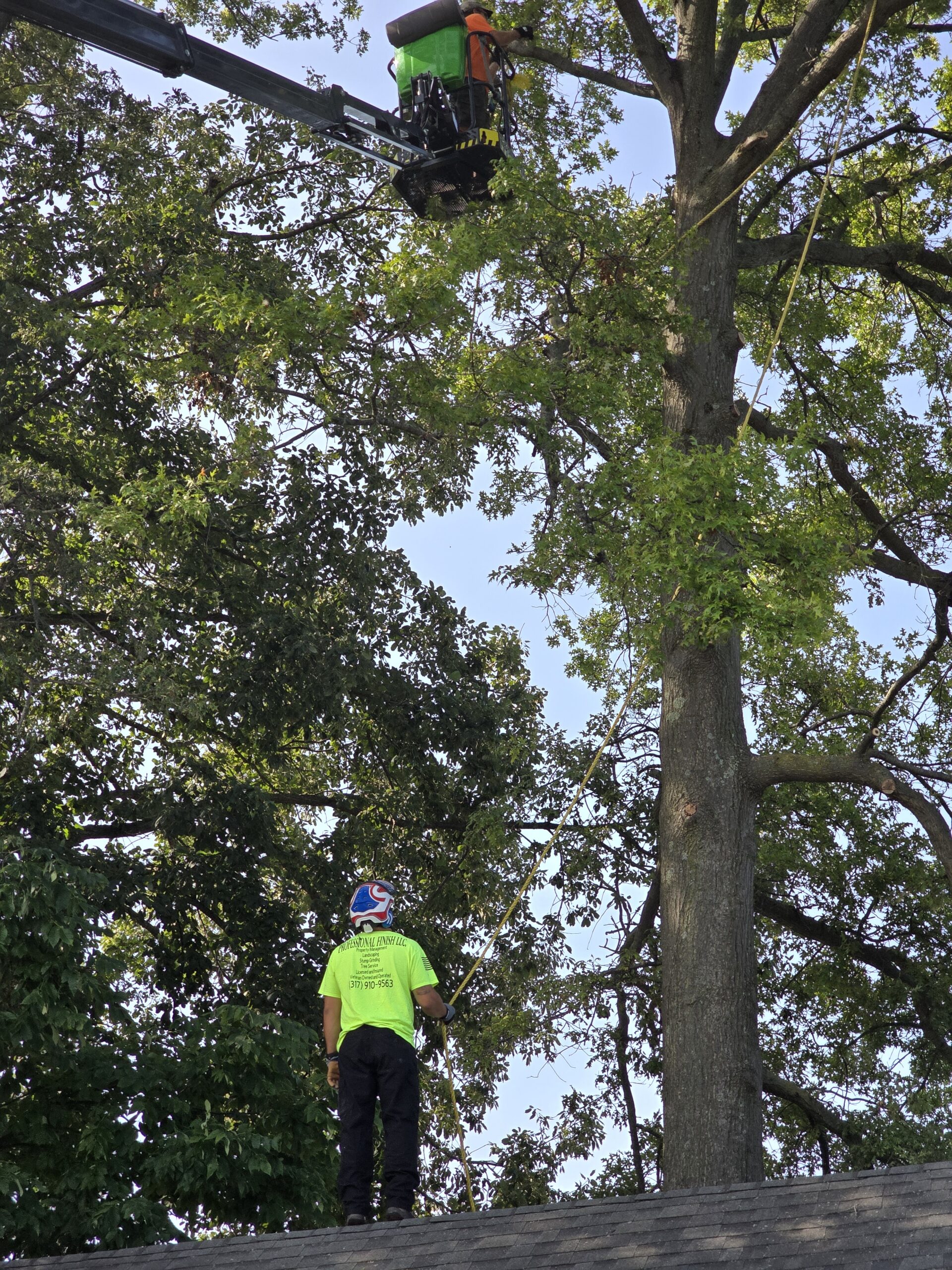
Need help right now? Pro Finish Outdoor is family-owned, locally based, and veteran-owned, ready to respond 24 / 7 for storm damage, fallen tree removal, or preventive pruning. Call or text (317) 910-9563 or request an inspection at ProFinishOutdoor.com/Contact.
Quick FAQ
- How often should I check my trees? Twice a year—once in early spring and again mid-summer before peak storm season.
- Should I remove a tree with mushrooms at the base? Not always, but you need an arborist assessment; decay could be advanced.
- Can I trim branches over my neighbor’s fence? Yes, if they overhang your property, but make clean cuts and avoid harming the tree’s health.