7 Smart Ways to Storm-Proof Your Trees in Fishers, Geist, and Nearby Towns This Summer
On April 2, 2025, Central Indiana saw wind gusts over 80 mph and several tornado touchdowns, according to the National Weather Service. Tree crews were booked for days after. A little care before storm season can save you a lot of cleanup later.
1. Schedule a Mid-Summer Tree Inspection
A trained eye can spot cracks, weak branch unions, and early decay that homeowners often miss. An inspection every 12 to 18 months is cheap peace of mind.
2. Prune Away Dead or Crossing Limbs
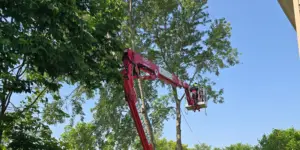
Routine tree trimming removes dead weight that acts like a sail in high winds. Focus on branches over your roof, driveway, or fence to cut the risk of a limb landing on your house, car or pool.
3. Thin the Canopy, Don’t Top It
Selective thinning lets wind flow through the crown without stressing the tree. Avoid “topping.” It creates weak sprouts that snap off later.
4. Watch Split and Double Trunks
Multi-trunk maples and trees with a split down the middle are common around Geist Reservoir. They often fail where the trunks meet. Have them looked at. Some can be trimmed to cut weight. Some need to come down before a storm does it for you.
5. Mulch and Water Properly
Healthy roots anchor better in saturated soil. Add a three-inch mulch ring (keep it off the trunk) and water deeply during drought weeks so roots grow wide and strong.
6. Secure Loose Yard Features
Storm prep means more than trees. Patio furniture, kid playsets, and even decorative yard lights become airborne projectiles that snap limbs on impact. Tie them down or move them indoors when severe weather is forecast.
7. Know When Emergency Removal Is Allowed
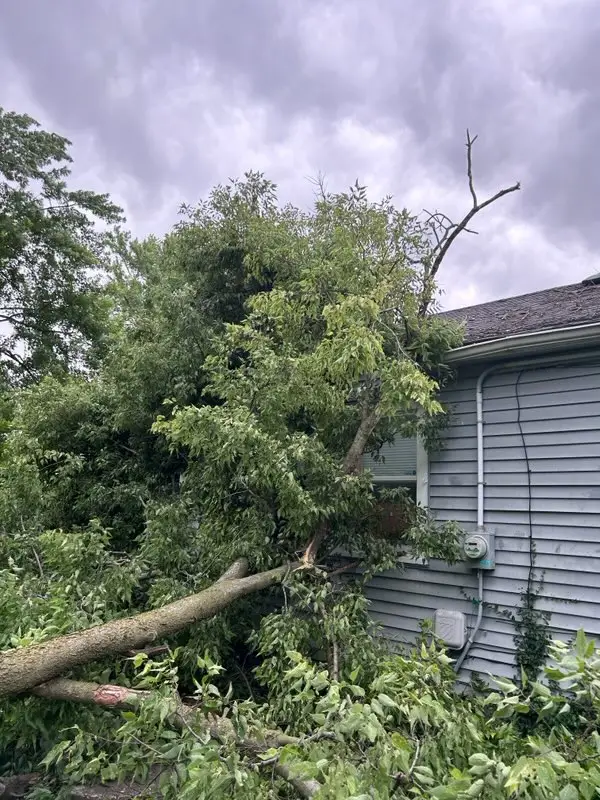
Fishers requires a permit to remove a street tree, but true emergencies like a tree on a roof are an exception. Check the Fishers city code for details. Take photos of the damage, then call a tree service.
A Quick Ground-Level Tree Check
- Look for cracked or hanging limbs over the driveway or roof.
- Check the base for mushrooms or shelf fungus. Both point to rot inside.
- Note any new lean or soil heaving up on one side.
- Flag dead limbs thicker than two inches.
- Take a photo of each big tree now. It helps with insurance later.
If a Tree Comes Down
- Keep everyone away from downed lines. If wires are involved, call 911 and the utility.
- Take photos for insurance before anything is moved.
- Get a written estimate. Emergency or highly hazardous removals start around $9,000 and can top $15,000 for crane or heavy storm work. Wind damage to a house is often covered by insurance.
See our storm damage tree removal page for what happens when you call.
After the Storm
- Grind leftover stumps so they don’t become trip hazards. See stump grinding.
- Replant with sturdy natives like swamp white oak or serviceberry. Our best trees for Indiana guide has more.
When to Call Pro Finish Tree Care
- Fallen tree blocking a driveway or road
- Tree on house or fence after a thunderstorm
- Hanging limbs over power lines
We are family-owned, locally based, and veteran-owned, so you get a fast reply from neighbors who know Midwest weather. Call or text (317) 910-9563 for help after a storm.
FAQs
Does insurance cover storm damage tree removal?
Usually yes, if the tree hits a covered structure. Save photos and receipts.
What’s the best time of year to trim?
Late winter through early spring works well for most trees. Don’t prune oaks from April through July, when oak wilt spreads most easily.
Storm season is hard to predict, but tree care doesn’t have to be. A short inspection and some strategic pruning now can save your roof, your wallet, and your peace of mind when the next line of storms rolls through Fishers.
Live near Geist? See our Fishers tree service page.