When searching for “tree trimming services near me,” look for a local, insured tree company that evaluates each tree individually, explains which branches should be removed, protects your property during the work, and includes cleanup in the estimate. Professional trimming can remove hazardous limbs, create clearance around structures, improve tree appearance, and address damage caused by Central Indiana storms.
Trees provide shade, privacy, curb appeal, and character to your property. However, dead limbs, overgrown branches, storm damage, and poor tree structure can create safety concerns when they are not addressed.
Pro Finish Tree Care provides professional tree trimming and tree pruning for homeowners, businesses, apartment communities, HOAs, schools, churches, offices, retail properties, and other locations throughout Central Indiana. Available services include dead branch removal, hazardous limb removal, crown raising, crown reduction, canopy work, storm-damage trimming, and clearance trimming around homes and structures.
Do I Need Tree Trimming Services Near Me?
You may need professional tree trimming when branches are dead, broken, overgrown, hanging over your home, or interfering with the normal use of your property.
Common signs that a tree needs attention include:
- Dead or leafless branches in an otherwise healthy canopy
- Cracked, split, or partially detached limbs
- Branches touching your roof, siding, gutters, or chimney
- Limbs hanging over vehicles, driveways, or walkways
- Low branches blocking visibility or access
- Branches rubbing or crossing one another
- Uneven or excessively heavy canopy growth
- Storm-damaged branches caught in the tree
- Weak limbs hanging over outdoor gathering areas
- Branches growing toward utility lines
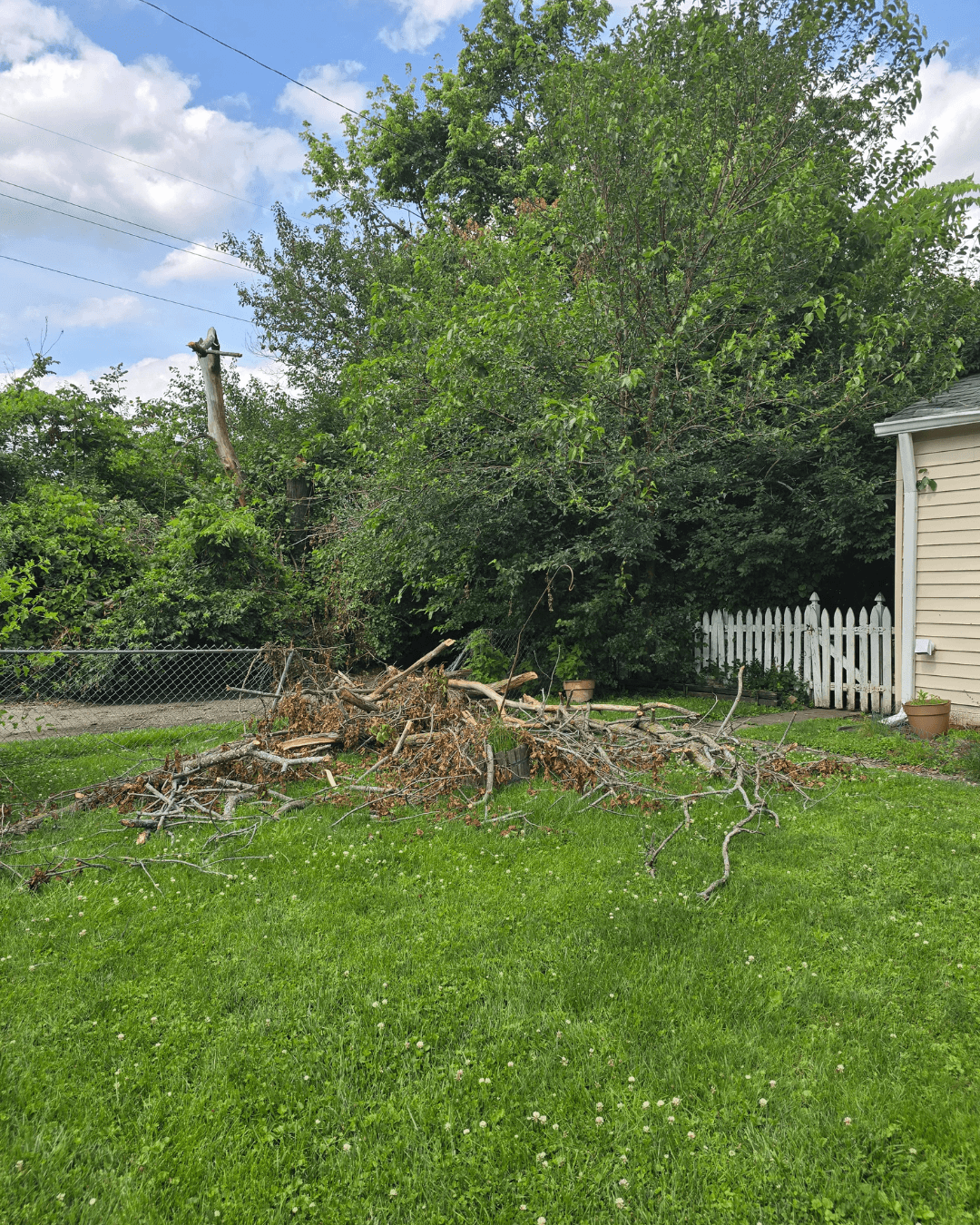
- Large amounts of recently fallen tree debris
- Changes in the tree’s shape, balance, or lean
Not every unusual-looking branch requires immediate removal. An on-site inspection can help determine whether the tree needs routine pruning, hazardous limb removal, monitoring, or complete tree removal.
What Does Professional Tree Trimming Include?
Professional tree trimming is more than shortening branches with a chainsaw. Each cut should serve a clear purpose and consider the tree’s species, age, condition, structure, and location.
The International Society of Arboriculture explains that pruning may be used to remove dead branches, improve form, reduce risk, create clearance, or improve selected light and airflow conditions. It also warns that improper or excessively heavy pruning can cause lasting damage to a tree.
Depending on the condition of your trees, professional service may include the following.
Dead Branch Removal
Deadwood removal addresses dead, dying, diseased, weakly attached, or low-vigor branches within the tree’s canopy.
Dead branches can eventually fall because they are no longer supported by healthy living tissue. Removing identifiable deadwood may reduce hazards around:
- Homes
- Garages
- Driveways
- Vehicles
- Sidewalks
- Fences
- Play areas
- Outdoor seating areas
- Commercial entrances
Large or elevated dead branches should not be removed without appropriate training, equipment, and safety procedures.
Hazardous Limb Removal
A hazardous limb may be cracked, split, partially detached, storm damaged, or poorly attached to the tree.
These branches can be especially dangerous when positioned above a roof, driveway, parking area, sidewalk, or gathering space.
A professional tree trimming company should examine the branch, its point of attachment, the surrounding canopy, and anything located beneath it before beginning the work.
Crown Raising
Crown raising removes selected lower branches to create more clearance beneath a tree.
This type of trimming may help when branches interfere with:
- Vehicles entering a driveway
- People using a sidewalk
- Lawn equipment
- Building entrances
- Street visibility
- Business signs
- Outdoor lighting
- Rooflines and structures
The goal is to create practical clearance without removing an excessive amount of the lower canopy.
Crown Reduction
Crown reduction selectively decreases the height or spread of part of a tree.
Proper reduction is different from tree topping. Reduction cuts branches back to suitable lateral branches while attempting to preserve the tree’s natural structure.
The International Society of Arboriculture identifies topping as a harmful practice that can create stress, decay, weak regrowth, and structural concerns.
Clearance Trimming
Clearance trimming addresses branches growing too close to buildings and frequently used areas.
Homeowners commonly request clearance around:
- Roofs
- Gutters
- Siding
- Chimneys
- Garages
- Driveways
- Walkways
- Fences
- Exterior lighting
- Security cameras
Branches rubbing against roofing materials or siding may cause damage over time. Limbs hanging above a structure may also create a greater concern during strong winds, thunderstorms, snow, or ice.
Storm-Damage Trimming
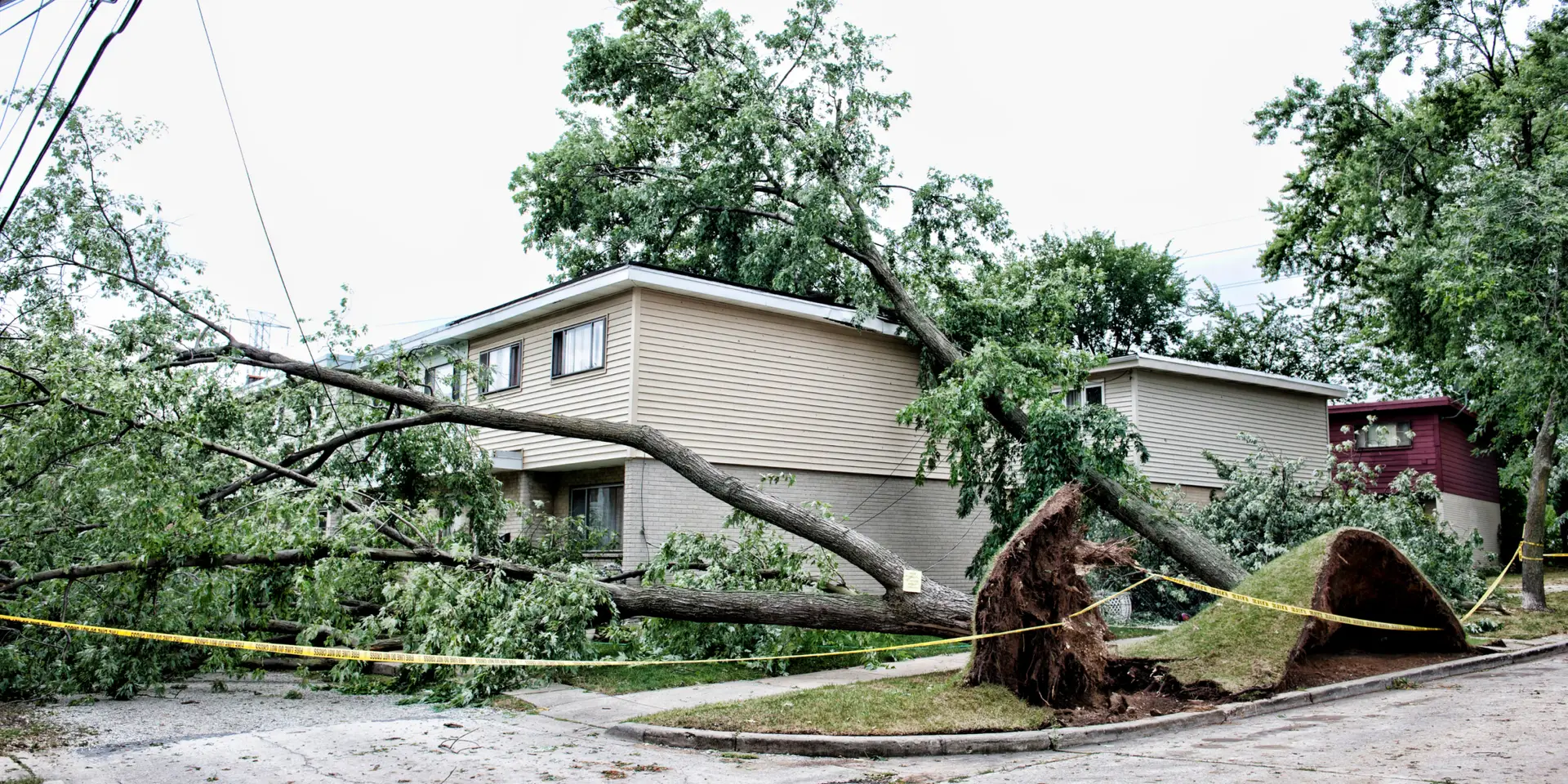
Central Indiana storms can break branches, expose weak branch unions, and leave damaged limbs hanging in the canopy.
After severe weather, look for:
- Freshly broken branches
- Hanging limbs
- Cracks near major branch unions
- Branches resting on a roof
- Split trunks
- A newly leaning tree
- Lifted soil around the roots
- Large pieces of fresh debris
Do not stand underneath a storm-damaged tree or attempt to pull down a suspended branch.
Pro Finish Tree Care advertises 24/7 emergency response for fallen trees, hazardous branches, and storm-related debris throughout its Greater Indianapolis service area.
Tree Trimming vs. Tree Pruning: What Is the Difference?
Tree trimming and tree pruning are often used interchangeably, but they can describe slightly different objectives.
Tree trimming commonly focuses on controlling overgrowth, creating clearance, improving appearance, and keeping branches away from structures.
Tree pruning commonly focuses on tree structure, branch health, weak growth, damaged limbs, disease concerns, and long-term development.
A professional project may involve both trimming and pruning. The most important consideration is not the label used—it is whether the company can clearly explain:
- Why the tree needs work
- Which branches will be removed
- How much growth will be removed
- How the work may affect the tree
- How nearby property will be protected
- What cleanup is included
When Is the Best Time to Trim Trees in Indiana?
The best time to trim a tree depends on its species, health, age, condition, and the reason for trimming.
Light pruning to remove certain dead, weak, or damaged branches may be completed during much of the year. More extensive pruning may be better during the tree’s dormant season or before the spring growth period.
However, timing may need to change when:
- The tree is stressed
- Heavy pruning is required
- A tree disease is active
- Storm damage creates an immediate hazard
- Branches threaten a building or frequently used area
- The tree species has specific pruning requirements
ISA guidance notes that susceptible trees should not be pruned during active transmission periods for certain diseases, including oak wilt. It also advises against removing a large percentage of living foliage from a stressed tree.
Emergency hazards should be evaluated promptly regardless of the season.
How Often Should Trees Be Trimmed?
There is no single trimming schedule that applies to every tree.
How frequently a tree needs attention depends on:
- Species
- Age
- Growth rate
- Health
- Location
- Previous pruning
- Storm exposure
- Distance from buildings
- Distance from roads and walkways
- Desired clearance
- Branch structure
Young trees may benefit from periodic structural pruning as they develop. Mature trees may only require occasional deadwood removal, corrective pruning, clearance work, or storm-damage trimming.
Trees growing close to roofs, driveways, roads, sidewalks, commercial buildings, and utility infrastructure should be inspected more regularly than trees growing in an open area.
How Much Do Tree Trimming Services Cost in Indianapolis?
The cost of tree trimming in Indianapolis depends on the size of the tree, the amount of work required, the tree’s location, accessibility, equipment requirements, and the level of risk involved.
Factors that may affect your estimate include:
Tree Height and Canopy Size
A small ornamental tree usually requires less labor and equipment than a large mature tree with an extensive canopy.
Branch Size
Large branches require more careful cutting, lowering, rigging, and debris handling than small limbs.
Tree Location
Trees close to homes, garages, fences, pools, driveways, vehicles, and neighboring property may require additional planning and rigging.
Property Access
Narrow gates, fenced yards, steep grades, landscaping, septic systems, and limited equipment access can affect how the work must be completed.
Tree Condition
Dead, damaged, leaning, split, or storm-affected trees may involve more risk than healthy trees receiving routine trimming.
Equipment Requirements
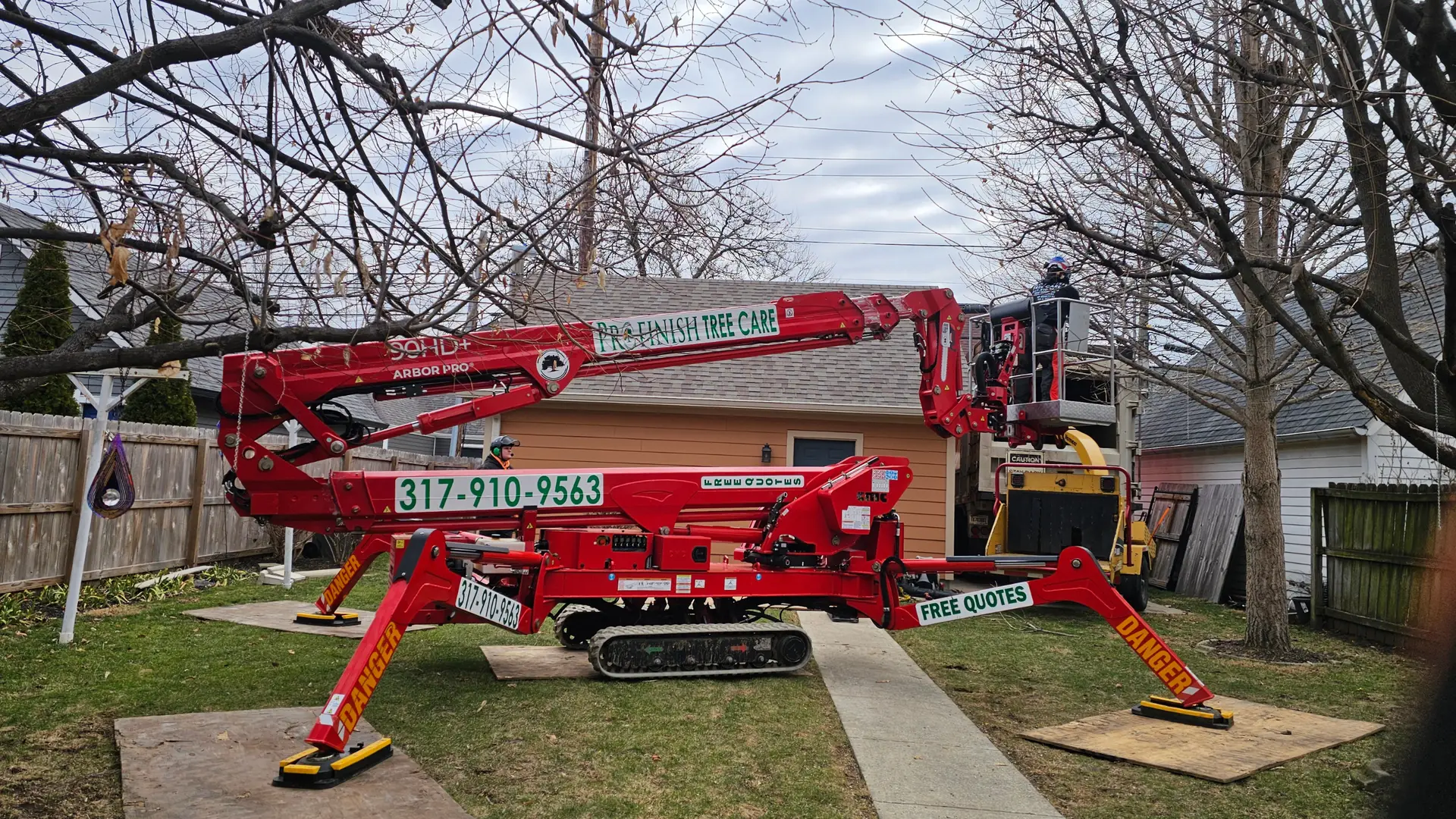
The project may require climbing equipment, aerial lifts, bucket trucks, ropes, rigging systems, chainsaws, chippers, or other specialized equipment.
Amount of Debris
Pricing may depend on the quantity of brush, limbs, logs, leaves, and wood chips that must be processed or hauled away.
Emergency Service
Urgent storm response or after-hours tree service may be priced differently from scheduled trimming.
Because every tree and property is different, the most accurate way to determine the cost is through an on-site estimate.
Pro Finish Tree Care provides free estimates based on the specific tree, property conditions, access requirements, and requested work.
Is Tree Trimming Included With Tree Removal?
Tree trimming and tree removal are usually separate services.
Tree trimming removes selected branches while leaving the tree in place. Tree removal takes down the entire tree when it is dead, severely damaged, structurally unstable, unwanted, or interfering with a project.
Stump grinding may also be quoted separately from removal.
Before approving an estimate, ask whether the price includes:
- Branch removal
- Tree removal
- Stump grinding
- Brush chipping
- Log removal
- Wood stacking
- Complete debris cleanup
- Lawn protection
- Emergency service
- Additional tree work
A clear written scope prevents confusion about what will remain on the property after the project is complete.
Should My Tree Be Trimmed or Removed?
Trimming may be appropriate when the tree is generally healthy and the concern is limited to particular branches.
Removal may be appropriate when the entire tree presents a serious problem.
| Tree or property concern | Trimming may help | Removal may be considered |
|---|---|---|
| Dead branches | Yes | Sometimes |
| Branches touching the roof | Yes | Rarely |
| Low branches over a driveway | Yes | Rarely |
| Uneven canopy growth | Yes | Sometimes |
| Isolated storm damage | Yes | Sometimes |
| One damaged major limb | Sometimes | Sometimes |
| Completely dead tree | No | Yes |
| Severe trunk decay | Usually not | Yes |
| Uprooted tree | Usually not | Yes |
| Major trunk split | Sometimes | Yes |
| Severe lean toward a structure | Sometimes | Yes |
| Tree blocking construction | Sometimes | Yes |
The condition of the trunk, roots, major branch unions, surrounding soil, and overall canopy should be considered—not just the appearance of one branch.
Pro Finish Tree Care provides trimming, pruning, tree removal, stump grinding, storm cleanup, and land-clearing services, allowing the team to evaluate several possible options for the property.
Can Tree Trimming Help Prevent Storm Damage?
Professional trimming cannot guarantee that a tree or branch will never fail.
Trees are living structures affected by wind, rain, snow, ice, soil conditions, age, decay, disease, root damage, and previous storm exposure.
However, trimming may help address visible concerns such as:
- Dead branches
- Cracked limbs
- Weakly attached growth
- Broken branches
- Overextended limbs
- Branches above structures
- Storm-damaged portions of the canopy
A pre-storm inspection can identify obvious concerns before severe weather arrives, but no tree company can eliminate every possible risk.
Can I Trim a Large Tree Myself?
Small branches that can be reached safely from the ground may be manageable for some homeowners using appropriate hand tools.
Large-tree trimming is different.
Professional assistance should be considered when the work involves:
- Climbing
- Ladders
- Chainsaws
- Large overhead branches
- Hanging limbs
- Storm-damaged trees
- Branches above a roof
- Branches above vehicles
- Rigging
- Aerial equipment
- Utility lines
ISA guidance states that large-tree pruning involving work above the ground or power equipment can be dangerous and should be handled by properly trained tree-care professionals with appropriate safety equipment.
OSHA also identifies falling branches, falls, cutting equipment, and overhead power lines as major hazards in tree-care operations.
What Should I Do About Branches Near Power Lines?
Do not attempt to cut or pull a branch that is touching or dangerously close to an overhead power line.
Assume every overhead line is energized. Keep people and equipment away from the area and contact the appropriate utility provider for instructions.
OSHA states that line-clearance work close to energized electrical equipment requires specialized training and work practices.
A standard landscaping crew or homeowner should not attempt electrical line-clearance trimming.
How to Choose Tree Trimming Services Near You
Searching “tree trimming services near me” may produce dozens of companies. Do not choose solely based on which listing appears first or offers the lowest price.
Ask the following questions before hiring a tree trimming company.
Is the Company Insured?
Ask about general liability insurance and workers’ compensation coverage.
Tree work involves heavy branches, cutting equipment, climbing, vehicles, structures, and people working on the ground. Appropriate insurance helps protect both the customer and the company.
Pro Finish Tree Care states that it carries general liability and workers’ compensation insurance.
Will Someone Inspect the Tree Before Quoting It?
A complete estimate should consider:
- Tree size
- Branch condition
- Surrounding structures
- Equipment access
- Cleanup requirements
- Overhead hazards
- Nearby landscaping
- The customer’s objective
Photographs can help explain the project, but an on-site assessment is often necessary for an accurate price and work plan.
What Type of Trimming Is Being Recommended?
Ask whether the recommendation involves:
- Deadwood removal
- Crown raising
- Crown reduction
- Hazardous limb removal
- Clearance trimming
- Structural pruning
- Storm-damage trimming
- Routine maintenance
A reputable company should be able to explain the purpose of the work in understandable language.
Does the Company Top Trees?
Avoid indiscriminate topping unless an appropriately qualified tree professional has identified an unusual and defensible reason.
Topping can damage the tree’s structure, encourage weak regrowth, increase decay concerns, and destroy the tree’s natural form.
Is Cleanup Included?
Confirm whether the crew will:
- Chip branches
- Haul away debris
- Remove logs
- Stack firewood
- Rake the work area
- Remove wood chips
- Leave mulch
- Protect the lawn
Cleanup expectations should be discussed before the job begins.
Can the Company Handle Additional Problems?
A trimming project may reveal decay, splitting, storm damage, or another structural concern.
Working with a company that also provides tree removal, stump grinding, emergency response, and storm cleanup may simplify the process when additional work becomes necessary.
Residential Tree Trimming Services
Residential tree trimming may be needed to protect homes, garages, driveways, patios, fences, landscaping, and outdoor living areas.
Common residential projects include:
- Trimming branches above a roof
- Removing dead limbs
- Raising branches above driveways
- Clearing walkways
- Addressing storm damage
- Improving backyard clearance
- Trimming trees near garages
- Removing weak limbs above play areas
- Correcting overgrown trees near fences
- Preparing trees for severe weather
Before work begins, the crew should consider equipment access, gates, pets, vehicles, underground systems, landscaping, and neighboring property.
Commercial Tree Trimming Services
Commercial properties have additional concerns involving employees, customers, tenants, vehicles, entrances, sidewalks, signage, and liability exposure.
Commercial trimming may include:
- Parking-lot tree maintenance
- Branch clearance above sidewalks
- Visibility improvement
- Sign clearance
- Storm preparation
- Deadwood removal
- Multi-tree maintenance
- Apartment-community tree care
- HOA tree trimming
- Office-complex maintenance
- Retail-property tree care
- Church and school property maintenance
Pro Finish Tree Care serves residential properties and several types of commercial and community properties throughout Central Indiana.
Tree Trimming Services in Indianapolis and Central Indiana
Pro Finish Tree Care is a locally operated, family-owned, and veteran-owned tree company serving residential and commercial customers throughout Greater Indianapolis. The company has served the area since 2019 and provides routine tree care as well as emergency tree response.
Primary service areas include:
- Indianapolis
- Fishers
- Carmel
- Noblesville
- Westfield
- Greenwood
- Fortville
- McCordsville
- New Palestine
- Greenfield
- Franklin
- Southport
- Surrounding Central Indiana communities
Additional nearby service coverage may be available depending on the project location.
Why Choose Pro Finish Tree Care?
Homeowners and businesses choose Pro Finish Tree Care for:
- Professional tree trimming
- Tree pruning
- Hazardous branch removal
- Tree removal
- Stump grinding
- Storm-damage cleanup
- Emergency tree response
- Land clearing
- Residential tree service
- Commercial tree service
- Free on-site estimates
- Local Central Indiana service
Every tree should be evaluated individually to determine the appropriate scope of work without unnecessarily compromising its health or future growth.
Frequently Asked Questions About Tree Trimming Services Near Me
How do I know whether my tree needs trimming?
Your tree may need trimming if it has dead branches, hanging limbs, branches touching your home, low branches blocking access, crossing branches, uneven growth, or visible storm damage.
How much does tree trimming cost in Indianapolis?
The price depends on the tree’s height, branch size, location, condition, access, equipment requirements, amount of debris, and level of risk. An on-site estimate provides the most accurate price.
Does Pro Finish Tree Care provide free estimates?
Yes. Pro Finish Tree Care provides free estimates and on-site consultations for tree-care projects.
Is tree trimming the same as tree pruning?
The terms are often used interchangeably. Trimming commonly focuses on clearance and appearance, while pruning often focuses on health, structure, damaged branches, and long-term growth.
When is the best time to trim trees in Indiana?
The best time depends on the species, condition, and objective. Light deadwood removal may be completed during much of the year, while heavier pruning may require more careful timing.
Can trimming save a damaged tree?
Sometimes. If the damage is limited to specific branches and the trunk and roots remain stable, professional trimming may help preserve the tree. Severe trunk, root, or structural damage may require removal.
Will tree trimming stop branches from growing back?
No. Trimming manages and redirects growth, but a living tree will continue producing new growth.
Is tree topping recommended?
Tree topping is generally discouraged because it can damage the tree, encourage weak growth, increase decay concerns, and negatively affect its natural structure.
Does tree trimming include cleanup?
Cleanup depends on the company and written estimate. Ask whether brush, branches, logs, leaves, and wood chips will be removed before approving the work.
Can you trim trees after a storm?
Yes. Storm-damage trimming can remove broken, hanging, split, or hazardous branches. Avoid standing beneath a damaged canopy while waiting for an inspection.
Does Pro Finish Tree Care provide emergency tree service?
Yes. The company advertises around-the-clock emergency response for hazardous trees, fallen branches, and storm damage throughout Greater Indianapolis.
What areas does Pro Finish Tree Care serve?
The company serves Indianapolis, Fishers, Carmel, Noblesville, Westfield, Greenwood, and several surrounding Central Indiana communities.
Request a Free Tree Trimming Estimate
Do not wait for a damaged or overgrown branch to fall before addressing a potential problem.
Pro Finish Tree Care provides professional tree trimming and tree pruning for homeowners and businesses throughout Indianapolis, Fishers, Carmel, Noblesville, Westfield, Greenwood, and surrounding Central Indiana communities.
Call 317-910-9563 or submit the website’s quote form to schedule a free on-site estimate.